

 By
By 7 reassuring melatonin heart failure facts that could protect your sleep and your heart
At 2 a.m., Margaret was still staring at the ceiling. Her heart failure diagnosis had already taken her energy and her afternoon walks. Now it was taking her sleep too. Like millions of people in the same situation, she’d heard that melatonin might help her drift off, but she’d also seen a scary headline linking melatonin and heart failure. So she did what most of us do: she Googled it at midnight, half-asleep and fully confused.
If you or someone you love is in the same boat, this article breaks down what melatonin actually is, what heart failure does to the body, and what the science genuinely says about melatonin heart failure safety, separating solid evidence from early, unproven research. At WayfitHub, we believe good sleep decisions start with clear, honest information, not panic.

What is melatonin, really?
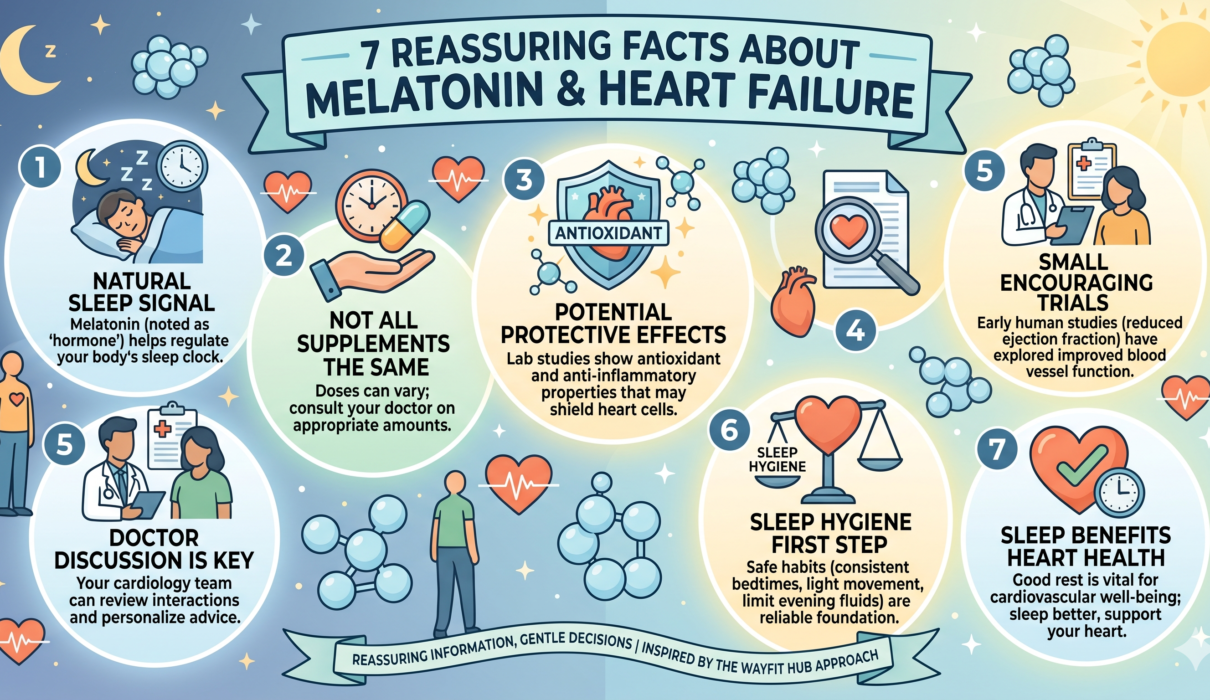
Melatonin is a hormone made by your pineal gland, a tiny structure deep in the brain. Think of it as your body’s internal dimmer switch. When darkness falls, melatonin rises and signals that it’s time to wind down. When light returns, melatonin fades and your body wakes up.
Supplement melatonin works on the same switch, but it isn’t identical to flipping your own natural dimmer. Doses in pills are often far higher than what your body produces on its own, which matters when we talk about long-term use.
Takeaway
Melatonin is a natural sleep signal, but supplement doses can act differently from your body’s own rhythm.
What is heart failure, in plain English?
Heart failure doesn’t mean the heart has stopped. It means the heart has become a tired pump that struggles to move blood as efficiently as it should. Fluid can back up into the lungs and legs, fatigue sets in, and nights become harder because lying flat can make breathing feel more difficult.
Picture a caregiver named Daniel, watching his father struggle to settle at night because every position feels uncomfortable. That nightly struggle is exactly why so many heart failure patients start asking about melatonin in the first place.
Takeaway
Poor sleep is common in heart failure, which explains why melatonin keeps coming up as a possible solution.
Melatonin heart failure research: what does the evidence actually show?
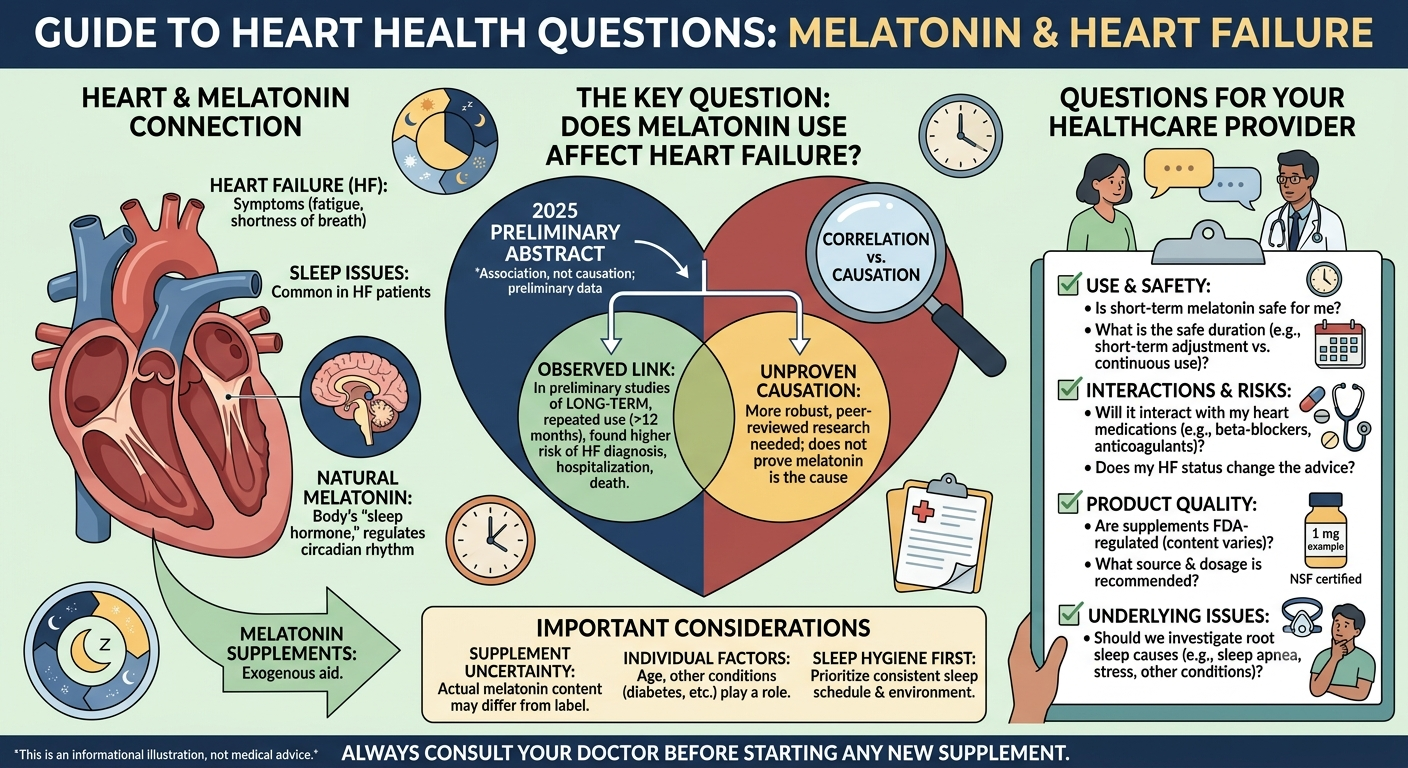
This is where things get genuinely interesting, and a little complicated. There isn’t one simple answer, because the research points in two different directions depending on the type of study.
The encouraging side: small trials and lab research
Several lab and animal studies suggest melatonin has antioxidant and anti-inflammatory properties that may protect heart cells and support mitochondrial function, the tiny energy factories inside cardiac tissue. A small randomized clinical trial in patients with reduced ejection fraction heart failure also explored whether melatonin could improve blood vessel function, with some encouraging early signals. These studies are real, but they’re early, small, and not yet enough to prove melatonin is therapeutic for human heart failure.
The cautionary side: a large 2025 study raised real questions
In late 2025, researchers presented findings from a large analysis of more than 130,000 adults with insomnia. People who had used melatonin long-term showed a notably higher rate of heart failure diagnosis, hospitalization, and death compared with those who hadn’t used it. That sounds alarming, but experts were quick to add important context: this was an observational study, it hasn’t yet been peer-reviewed, and it can show a connection without proving melatonin actually caused the problem. People who struggle with severe, chronic insomnia may simply have other underlying health risks driving both the sleep trouble and the heart issues.
Takeaway
Established evidence shows melatonin has biological effects on the cardiovascular system, but whether it helps or harms long-term heart failure outcomes in humans is still an open, ongoing question.
Is melatonin safe if you already have heart failure?
Right now, there is no definitive evidence proving melatonin is unsafe specifically for people with heart failure, but there isn’t a guarantee of safety either. Most cardiology experts currently recommend using the lowest effective dose for the shortest possible time, rather than nightly long-term use without medical guidance.
Consider someone like Priya, who assumed melatonin must be “safer” than prescription sleeping pills simply because it’s sold over the counter and labeled natural. Natural doesn’t automatically mean risk-free, especially when you’re also taking blood pressure medications, blood thinners, or diuretics, all common in heart failure care. These combinations can interact in ways that deserve a doctor’s input.
Takeaway
Treat melatonin like any supplement that interacts with a serious condition: useful for some, but worth a conversation with your cardiologist first.
Practical tips for better sleep with heart failure
Before reaching for any supplement, small daily habits can make a noticeable difference. Keeping a consistent bedtime, even on weekends, helps your body’s natural rhythm stay steady without relying on melatonin heart failure debates at all.
Elevating the head of the bed slightly can ease nighttime breathing, while limiting fluids and salty foods in the evening reduces overnight fluid buildup. Gentle daytime movement, bright morning light, and cutting caffeine after lunch all support deeper sleep naturally. The team at Wayfit Hub often points readers toward simple sleep-tracking tools and gentle movement routines, since small, sustainable changes tend to outperform quick fixes for people managing chronic heart conditions.
Takeaway
Sleep hygiene habits are a safer first step, with melatonin treated as a conversation for your doctor rather than a default solution.
When should you talk to a healthcare professional?
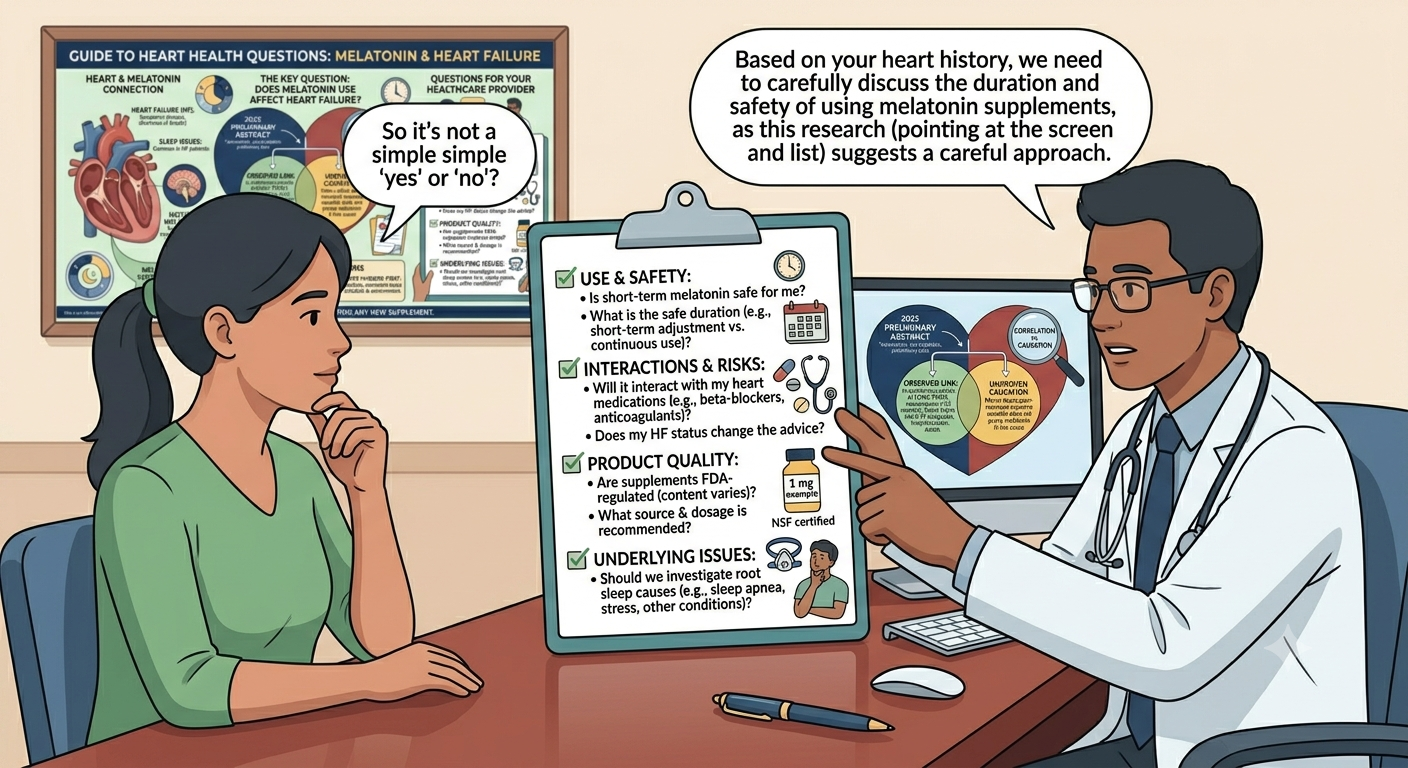
Reach out to your doctor before starting melatonin if you have heart failure, take heart or blood pressure medications, or notice new swelling, shortness of breath, or chest discomfort. Your care team can review your specific medications, your ejection fraction, and your overall risk profile before recommending any dose.
This single conversation can prevent unnecessary worry and unnecessary risk, and it’s the most reliable way to personalize advice that generic articles, including this one, simply cannot provide.
Conclusion: a balanced view of melatonin and heart failure
The honest answer to the melatonin heart failure question is that science is still catching up. Encouraging lab findings sit alongside a cautionary large-scale study, and neither tells the complete story yet. What we do know is that sleep matters enormously for heart health, and there are safe, proven habits you can start tonight while the research continues to evolve.
If better sleep and a healthier heart rhythm are on your mind, WayfitHub is here to help you sort evidence from hype, one honest article at a time. Explore more of our heart-health and sleep resources, and always loop your doctor in before adding anything new to your nightly routine.
