


 By
By Pull day workout: the exercise I ignored for years (and regret it now)
Quick answer
A well-built pull day workout trains your back, biceps, and rear shoulders through vertical pulls like pull-ups or lat pulldowns, horizontal pulls like rows, and one move almost everyone leaves out: the straight-arm pulldown. It isolates the lats without letting your biceps take over, and it is usually the missing piece between a back that just feels worked and a back that actually grows.
Most pull days observe the same pattern, mine covered longer than I care to admit. Pull-ups or lat pulldowns first, a row or two , then directly into curls once the back feeling tired enough to name it done.
Here’s the catch no one points out: your back probably isn’t always worn out. Your biceps are. Almost every pulling exercise bends the elbows as much because it moves your shoulders, so your arms quietly take over before your lats ever get the memo.
I have most easily observed this in my own training after I brought back one move after years of skipping it: the straight-arm pulldown. First strict set and I should find that my lats work in a way pull-ups had never quite delivered.If the day your back felt extra like a bicep workout in disguise, this is probably why.
What a pull day workout really trains
On a push, pull, legs split, pull day cover the entire part involved in pulling weight toward your body: back, biceps, rear shoulders, and grip. Push day handles chest, shoulders, and triceps. Leg day, well, you already understand what that one is asking of you.
A solid pull day combines two patterns. Vertical pulls bring weight down from overhead, like a pull-up. Horizontal pulls bring the weight back toward your torso, like a row. Together, they cover the maximum of what your back is built to do, but they still allow one pattern absolutely: pure shoulder extension, with no elbow bend in any way. That gap is smaller than it sounds and bigger than it feels.
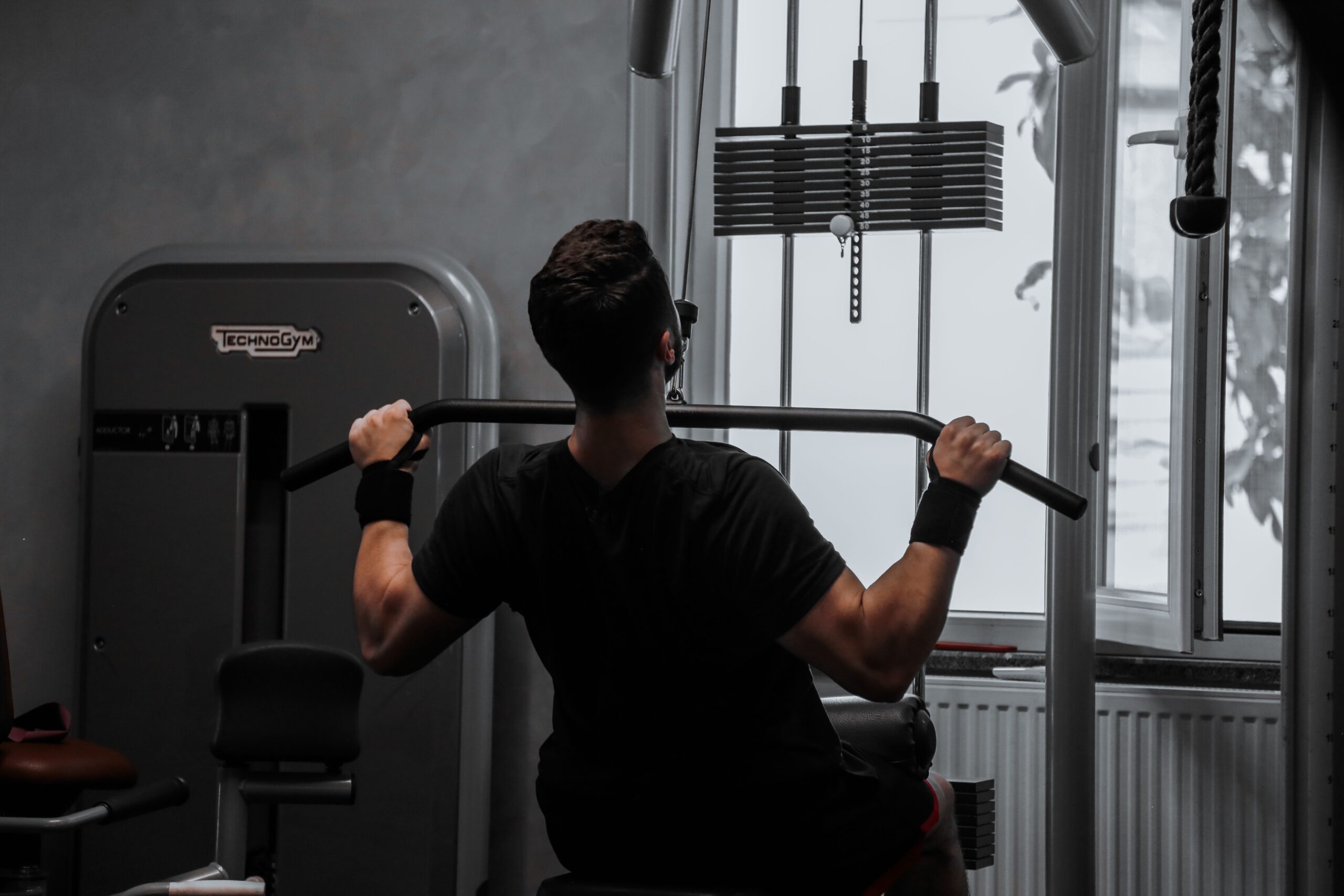
The back exercise most people skip on pull day
The straight arm pulldown doesn’t look impressive anymore, and I get why it’s skipped. Standing in front of the cable machine, grab the straight bar attached high overhead, and pull it down in an arc for the thighs, elbows locked almost the entire time. No heavy weights, no personal records, nothing to post about.
But feeling hard, and working the right muscle are two different things, and I needed to put myself wrong in this. A 2022 electromyography study in Applied Sciences compared the straight-arm pulldown against the barbell pullover and observed that it produced the highest activation in the lats and triceps.
The cause clicked for me once I really focused on it. The bent elbows pull your biceps into motion earlier, giving them a workload before you activate the lats. Straight arms eliminate that shortcut entirely, so your lats figure through the fullrange of shoulder extensions, exactly where they contract the hardest.
There’s a quieter advantage as well, one I only appreciated after adding this back in during a stretch of long desk days. Sitting makes the chest shorter and lets the upper back go quiet. The bottom of this pulldown forces your shoulder blades down and back, which is the opposite of the slouched position. A few managed sets here does more for the posture than a foam roller ever has for me.
How to do it without turning it into a row
Set the pulley to the top with a straight bar or rope connected. Stand far enough back to feel tension overhead, feet shoulder width apart, gentle knees, a moderate forward lean.
Keeping the elbows nearly straight, pull the bar down in a wide arc into the thighs, driving the movement from the shoulders instead of the arms. A tip that helps me: consider tucking your elbows into your back pockets. Pause briefly at the lowest, then control the bar back up instead of letting it snap.
If you catch yourself swinging your torso or bending your elbows to move the load, drop the load. This one rewards a strict, controlled arc over ego, every time Two to three sets of twelve to fifteen reps is plenty.

An entire pull day workout you can actually follow
Warm up with band pull-aparts or light rowing for a few minutes. Then work through this order. That’s the same one i default to whenever I want a back that grows,n ot just a back that feels sore the next day.
Do the vertical pull first , however you’re freshest: pull-ups, chin-ups, or lat pulldown machine, three to four sets of six to twelve repetitions.
Horizontal Pulls Forward: Seated cable row, chest supported row, or bare arm dumbbell row, three sets of 8 to 12 repetitions. Pair the ones with arm work using our back and bicep workout guide.
Straight-arm pulldowns follow, while your lats are warm but not your biceps: two to three sets of twelve to fifteen repetitions.
Finish with a rear delt motion like a face pull, two to three sets of twelve to fifteen repetitions, then two sets of curls to close things out. Your biceps have already earned a break by this point.
Thats how an enitre pull day workout you can easily follow.
How often to train pull day
Once or twice a week works pretty well for most peoples. Two sessions with a few days of recovery between them tends to build strength and size faster, but one targeted session a week, finished consistently, still gets you there. I would rather see someone showing up once a week for a month rather than twice a week for a month.
Note:Consistency matters in pull day workout.
Mistakes that quietly stall pull day progress
Letting your biceps become the limiting factor on every exercise is the biggest one, and it is the one this whole article has been circling. The straight-arm pulldown fixes it fast.
Grip fatigue is a close second. If your forearms give out before your lower back, the lifting straps on your heaviest sets hold the back training rather than the grip. I resisted straps for years out of a few damn thoughts that they were cheating. They are not.
Leaving aside the horizontal pull is the third. A back trained only with pull-ups and pulldowns stays flat and narrow. Rows create a thickness that gives it intensity and a depth that undoubtedly shows in the mirror.
A closing thought
Pull day workout does not need ten exercises to work. It needs the right patterns and one honest test of whether your back is doing the work, or your arms are quietly doing it for you again. Add the straight-arm pulldown, keep your form strict, and leave it at that for a few weeks. I think you can experience your lats in places you haven’t noticed in any way before, due to the fact that I still notice it. For the bigger picture on building strength that indicates, see our strength training guide.
Share this pull day workout with yours friends and follow wayfithub for more fitness guide.
Sam Carter, Way Fit Hub
