

 By
By Step into a healthier you: Aerobic exercise to reduce weight with 7 effective workouts for faster fat Loss and better fitness
Picture this: it is 9 p.m. on a Sunday. You have just finished meal-prepping for the week, your running shoes are by the door, and you have every intention of turning things around – again. Sound familiar? Most people trying to lose weight are not lazy. They are tired of starting over.
The problem is rarely willpower. It is usually the approach. Extreme diets drain your energy. Complicated programs overwhelm your schedule. And after a few weeks, life takes over and the whole thing collapses.
What actually works and what research and real-world experience both confirm – is consistent aerobic exercise to reduce weight one of the most proven, accessible strategies available paired with small, manageable changes in your daily habits. Not a 75-day challenge. Not a transformation program that demands two hours a day. Just movement that raises your heart rate, fits your life, and actually feels good once you get into it.
This article gives you seven aerobic workouts that genuinely deliver results, a sample weekly plan to remove the guesswork, and honest coaching advice on the habits that separate people who make progress from those who keep spinning their wheels. Read it once, bookmark it, and come back to it every time you need to reset your aerobic exercise to reduce weight routine.
| Why Your Body Responds So Well to Aerobic Exercise
To understand why aerobic exercise to reduce weight works so well, start with the basics. The word “aerobic” literally means “with oxygen.” When you move at a sustained, moderate pace walking briskly, pedaling a bike, or jogging around the park your body taps into a fuel system that runs on oxygen and stored energy. That stored energy is largely fat.
Unlike short, explosive efforts, aerobic exercise keeps you in a zone where your body is comfortable burning fat as its primary fuel source. The longer and more consistently you work in that zone, the more efficient your body becomes at using fat for energy – even when you are sitting at your desk or sleeping.
But the benefits go well beyond the number on the scale. Here is what happens to your body when you commit to regular cardio exercises:
- Your heart gets stronger. Each session trains your heart to pump more blood with less effort, reducing your resting heart rate and your risk of cardiovascular disease over time
- Your energy regulation improves. Aerobic fitness improves how your body processes glucose and insulin, which means more stable energy throughout the day and fewer afternoon crashes.
- Stress hormones drop. Cortisol — the hormone most associated with stress and stubborn belly fat — is actively reduced through consistent moderate exercise.
- Your sleep quality increases. People who exercise regularly fall asleep faster and spend more time in deep, restorative sleep stages.
- Mental clarity sharpens. Aerobic movement increases blood flow to the brain and triggers the release of mood-regulating chemicals that improve focus, memory, and emotional wellbeing.
The takeaway is simple: this is not just a fat loss tool. It is a full-system upgrade for your body. And unlike a crash diet, the results compound the longer you stick with it.
| 7 Aerobic Exercises to Reduce Weight That Actually Move the Needle
Forget the idea that you need to suffer through a workout to make progress. The seven forms of aerobic exercise to reduce weight below are effective precisely because they are sustainable. Choose two or three that appeal to you, start there, and build from that foundation.

1. Brisk Walking – The Simplest Aerobic Exercise to Reduce Weight
Why it works: As a daily form of aerobic exercise to reduce weight, Walking does not feel intense-and that is exactly the point. When you walk at a pace that gets your heart rate to 60–70% of its maximum, your body runs almost entirely on fat for fuel. There is no soreness the next day, no equipment required, and no recovery time needed. It is the one form of aerobic exercise that almost every person, regardless of age or fitness level, can do every single day without breaking down.
How to do it: Set a pace where conversation is possible but slightly labored -you should not be able to comfortably sing. Hold your core lightly engaged, let your arms swing naturally, and keep your gaze forward rather than at the ground. Aim for 35 to 50 minutes.
Beginner tip: Start with 20 minutes and add five minutes each week. A slight incline-even a gentle hill can increase calorie expenditure by 25% without changing your pace at all.
Walking is also one of the few fat loss workouts that acts as active recovery. Your muscles move, your circulation stays active, and your stress levels drop all without the wear-and-tear of higher-impact activity.
2. Cycling – High Output, Low Punishment on Your Joints
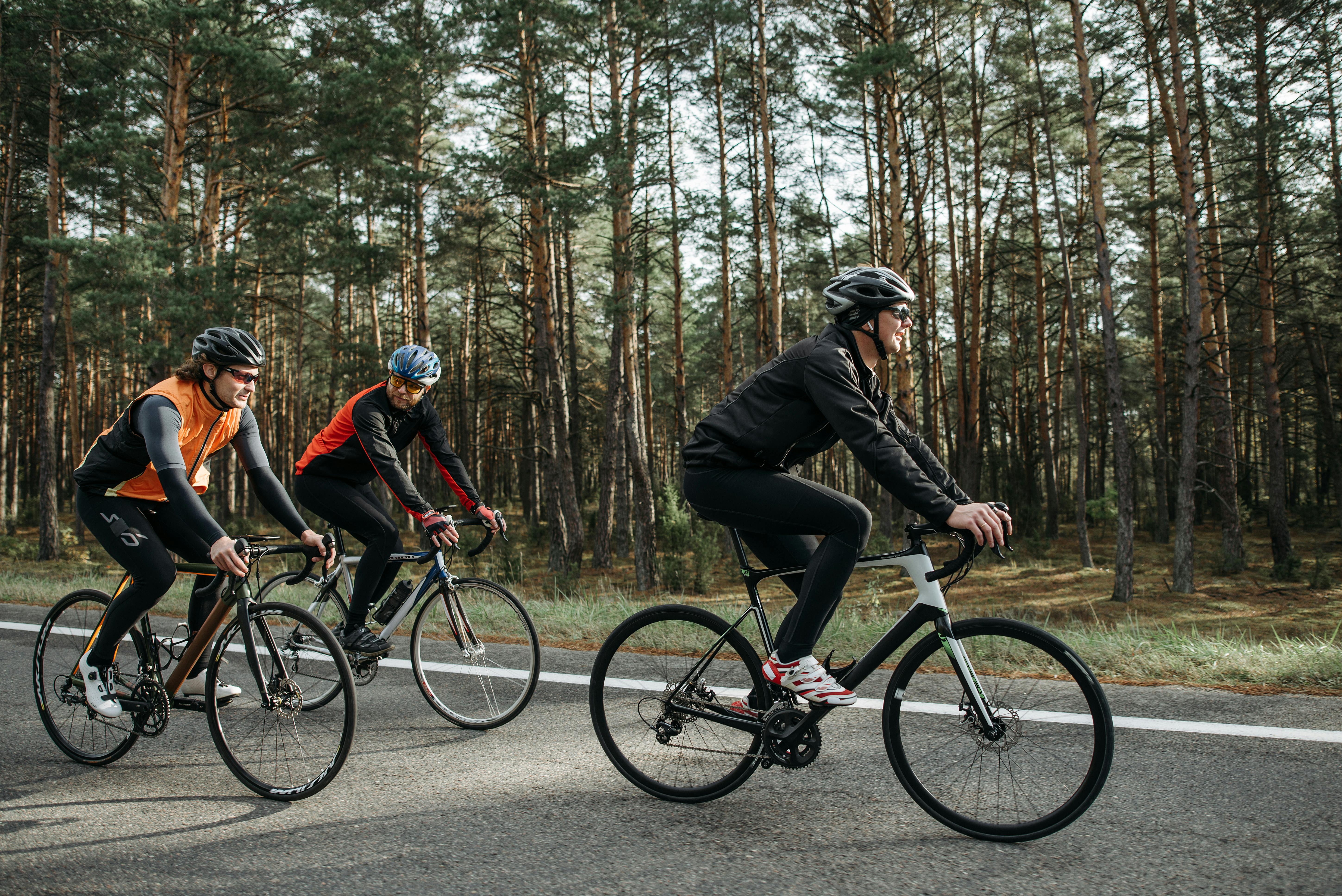
Why it works: Cycling is a uniquely accessible aerobic exercise to reduce weight because it separates the act of burning calories from the impact of carrying your body weight. Your legs power the pedals while the saddle supports you, which means your cardiovascular system works hard while your knees, hips, and ankles get a reprieve. For anyone carrying extra weight, this distinction matters enormously – it allows for longer, more productive sessions without the joint fatigue that stops many beginners in their tracks.
How to do it: Whether you are on a road bike or a stationary machine, keep a cadence – the speed of your pedaling that feels brisk but controlled. Aim for 40 to 60 minutes at a resistance level that makes you work but does not have you grinding to a near-stop with each rotation.
Beginner tip: On a stationary bike, try this: 3 minutes at easy resistance, 1 minute slightly harder, repeat for the duration. This basic interval structure burns more total calories than a flat ride at the same effort level.
Outdoor cycling adds the bonus of varied terrain, fresh air, and genuine enjoyment factors that quietly determine whether you will still be exercising six months from now.

3. Jump Rope – The 15-Minute Workout That Beats an Hour of Cardio
Why it works: Jump rope stands apart as an aerobic exercise to reduce weight because of its extraordinary calorie-per-minute efficiency. A 150-pound person skipping at a moderate pace burns roughly the same number of calories in 12 minutes as they would jogging for 30. It simultaneously trains your cardiovascular system, improves coordination, strengthens your calves and shoulders, and requires almost nothing in the way of equipment or space.
How to do it: Turn the rope with your wrists, not your arms. Land softly on the balls of your feet – not flat-footed and keep your jumps small, just high enough for the rope to pass underneath. Work in 30-second rounds with 30 seconds of rest, and build up to 45-second rounds as you improve.
Beginner tip: Practice the footwork without the rope first if needed. Even 10 minutes of jump rope done three times a week delivers measurable aerobic fitness improvements within a month.
As a beginner aerobic exercise option, it might feel awkward at first, but the learning curve is short and the payoff is real.

4. Swimming – A Full-Body Aerobic Exercise to Reduce Weight Gently
Why it works: Swimming is among the most complete forms of aerobic exercise to reduce weight: Water creates natural resistance from every direction, which means every stroke, kick, and turn engages your entire body simultaneously. Your heart works hard to fuel all of that muscle activity, but because the water supports your body weight, there is zero impact on your joints. For people dealing with knee pain, back problems, or obesity-related joint stress, swimming is often the only form of vigorous aerobic exercise they can perform comfortably.
How to do it: Swim continuous laps for 30 to 45 minutes, rotating between strokes to distribute the effort across different muscle groups. Freestyle builds endurance; breaststroke is gentler and better for beginners; backstroke gives your hip flexors and shoulders a different kind of work.
Beginner tip: If continuous laps feel overwhelming, swim one length, rest 30 seconds, repeat. Focus on breathing rhythm before you focus on distance. Relaxed, controlled breathing makes everything in the pool easier.
Swimming is one of the most complete effective aerobic workouts in existence – the kind of exercise you can build a long-term fitness life around.

5. Jogging – The Weight Loss Classic That Earns Its Reputation
Why it works: As an aerobic exercise to reduce weight, Jogging burns roughly double the calories of walking per mile while still keeping you in an aerobic zone where fat is the primary fuel source. Beyond the numbers, jogging creates a specific kind of cardiovascular adaptation your heart becomes more efficient, your lung capacity increases, and your body develops a higher baseline for burning calories even at rest.
How to do it: The most common jogging mistake is going too fast. Your pace should feel almost embarrassingly slow – if you cannot hold a sentence mid-run, you are moving at a pace that is too intense for sustained aerobic benefit. Keep your shoulders relaxed, your hands loose, and land with your foot under your hips rather than in front of you.
Beginner tip: The walk-to-jog method works better than trying to jog continuously from day one. Run for 90 seconds, walk for 90 seconds, and repeat for 20 minutes. After two to three weeks of this pattern, most beginners can jog continuously for 20 minutes without stopping.
No single workout to lose weight has the track record that jogging does — and its simplicity is a feature, not a limitation.

6. Dance Workouts – The Aerobic Exercise to Reduce Weight You Actually Look Forward To
Why it works: What makes dancing the most enjoyable aerobic exercise to reduce weight is simple: The biggest predictor of long-term fitness success is not which exercise burns the most calories – it is which exercise you will actually keep doing. Dance-based aerobic fitness removes the psychological resistance that kills most workout routines. You stop thinking about the effort because you are focused on the rhythm, the music, and the movement. Your heart rate climbs without feeling like punishment.
How to do it: You do not need a class or a specific format. Put together a 30-minute playlist of songs that genuinely move you, clear a small space, and dance with full commitment. Move your arms, vary the intensity, and allow yourself to be silly. If you prefer structure, online platforms offer everything from Zumba to K-pop cardio to Afrobeats routines.
Beginner tip: Focus on duration over technique. A beginner who dances freely for 35 minutes burns more calories and builds more aerobic fitness than someone who stops every few minutes to perfect their footwork.
Among all aerobic exercises for weight loss, dancing stands alone for its ability to make the work feel entirely optional.

7. Stair Climbing – The Everyday Environment Turned Fat-Burning Tool
Why it works: Stair climbing is an underrated aerobic exercise to reduce weight because it forces your body to work against gravity with every single step. Your glutes, hamstrings, and quads all fire simultaneously, driving your heart rate into a demanding aerobic zone quickly and keeping it there. Stair climbing burns approximately 60% more calories per minute than flat walking at the same pace. It also builds functional lower-body strength – the kind that makes everyday movement easier.
How to do it: Find a staircase with at least 10 to 15 steps. Walk up at a controlled pace, walk down (do not run down – descending puts excess stress on your knees), and repeat for 20 to 30 minutes. A stair machine at the gym works equally well and allows for consistent resistance.
Beginner tip: Even taking the stairs instead of the elevator consistently over several weeks creates a measurable difference in both aerobic fitness and calorie burn. You do not need a gym to get value from this exercise.
As one of the most underused calorie burning exercises in the average person’s routine, stair climbing is well worth adding to your weekly rotation.
| How to Squeeze More Out of Every Session
Getting real results from your aerobic exercise to reduce weight routine takes more than just showing up. Hard truth: the workout is only part of the equation. These habits separate people who see steady progress from those who work just as hard but keep plateauing.
- Treat consistency like a non-negotiable appointment. Three 35-minute sessions done reliably every week will produce more fat loss over six months than any intense program you cannot sustain past the third week. The best weight loss workout routine is the one you actually complete.
- Eat to support the work, not to reward it. Many people unknowingly eat back the calories they burned – often more. A post-workout protein-rich meal supports muscle recovery and reduces cravings far better than a treat-yourself mentality.
- Progress your effort gradually. Your body adapts to repeated stimulus. If your 40-minute walk feels easy after three weeks, add five minutes, increase your pace, or find a hillier route. Stagnation in your results almost always traces back to stagnation in your training stimulus.
- Protect your sleep like it is training time. Sleep deprivation elevates ghrelin (the hunger hormone) and suppresses leptin (the satiety hormone), which means poor sleep directly increases overeating. It also impairs fat metabolism. Seven to nine hours is not a luxury for weight loss – it is a requirement.
- Track something, even if it is simple. You do not need a fitness app or a heart rate monitor. A small notebook where you log what you did and for how long is enough. Tracking creates accountability and makes progress visible, which sustains motivation far longer than willpower alone.
- Set goals around behavior, not outcomes. ‘I will exercise four times this week’ is a goal you control entirely. ‘I will lose 5 pounds this month’ is not. Behavior-based goals build the habits; the results follow naturally.
| The Quiet Habits Blocking Your Progress
Most people who are not seeing results are not doing everything wrong – they are just making a few key mistakes that compound over time. Here is what to watch for:
- Going hard in bursts, then disappearing. A common pattern: exercise intensely for two weeks, burn out, rest for three weeks, repeat. This cycle never allows your body to build real aerobic fitness or sustained fat-burning capacity. Boring consistency beats exciting inconsistency every single time.
- Treating exercise as a license to eat more. This is extremely common and almost never conscious. A 40-minute jog burns around 400 calories. A post-workout protein bar and large latte can add 600 back. Nutrition awareness is not optional when fat loss is the goal.
- Jumping into too much too soon. Starting a weight loss workout routine with daily hour-long sessions when you have been sedentary for months is a fast track to injury, burnout, or both. Three 25-minute sessions per week is a genuinely effective starting point. Progress from there.
- Doing only one type of exercise indefinitely. Your body adapts to repeated movements. If you walk the same 30-minute route every day for four months, your body eventually becomes so efficient at it that the calorie burn drops significantly. Variety is not just for enjoyment – it is a fat loss strategy.
- Skipping the recovery day with guilt. Rest days are not failures. They are when your cardiovascular adaptations consolidate and your muscles repair. An active recovery walk, a light stretch session, or simply doing nothing are all legitimate training choices.
Your First-Month Aerobic Plan – Built for Real Life
This aerobic exercise to reduce weight plan is designed for someone starting from scratch or returning after a significant break. The goal is to build a habit first and improve fitness second. Both will happen – in that order.
| Day | Activity | Duration / Notes |
| Monday | Brisk Walking | 30 min – steady pace, slight incline if available |
| Tuesday | Cycling (bike or stationary) | 35 min – moderate resistance, easy effort |
| Wednesday | Active Recovery | 20 min gentle walk or light stretching – do not skip this |
| Thursday | Jogging (walk-jog intervals) | 25 min – 90 sec run, 90 sec walk, repeat |
| Friday | Jump Rope or Stair Climbing | 20 min – short work intervals, rest as needed |
| Saturday | Dancing Workout | 30 min – any format you enjoy, full effort |
| Sunday | Complete Rest or Slow Walk | Optional 15 min walk – no pressure, just move if you want to |
After four weeks of following this structure, most people notice two things: they feel noticeably better, and the workouts feel easier than they did on day one. That is your cue to start increasing duration or intensity.
