

 By
By A reformer machine can run well into the thousands of dollars. A Pilates board, the compact sliding platform with resistance cords that has been featured in recent fitness coverage, costs a fraction of that.
It is this difference that so many people look for before purchasing it. It sounds too convenient to be true: studio-style resistance, at home, without the studio price tag.
So does it really last? Here’s an honest look at what Pilates board workouts can and can’t do, as well as a full routine to try it for yourself.
What a Pilates board actually is
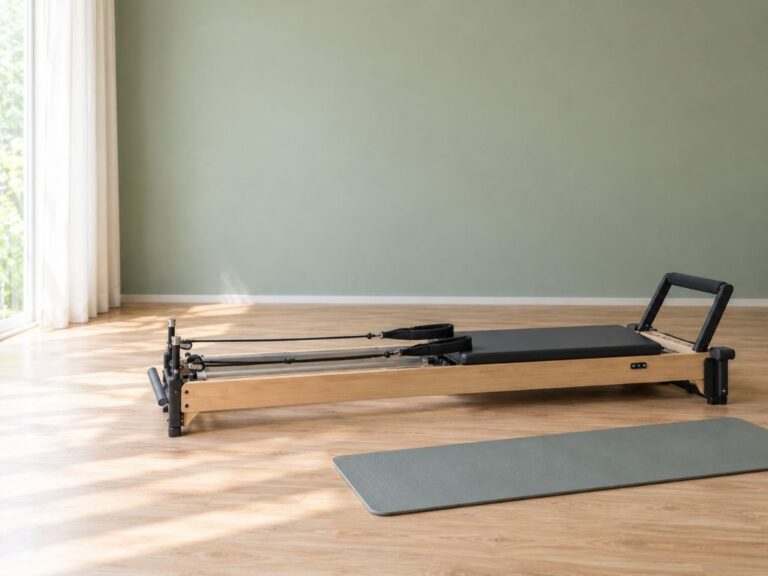
A Pilates board is a flat, stable platform with a sliding carriage or footplate and resistance cords attached to fixed points, designed to mimic the sliding, spring-resistant motion of a Pilates reformer without the size or price of a full machine.
You lie, sit, or kneel on the board and push or pull the cords in a slow, controlled motion. Resistance comes from the strings, not gravity, which is the same basic principle on which a reformer runs.
Does it actually rival a reformer?
Short answer: Not entirely, but the price difference is closer than you might expect.
A full reformer provides a wide range of tension, a longer carriage track, and attachments that the board simply doesn’t have room for. As stated, the main mechanism, controlled resistance against a sliding surface, is actually present in both. The Cleveland Clinic notes that Pilates overall builds core strength through this kind of controlled, resistance-based movement, regardless of which equipment delivers it.
The board also holds up particularly well on balance training. The National Institute on Aging lists balance work as one of three essential exercise categories, and a slippery, unstable surface is a natural way to build it.
Honest Verdict: A board won’t completely replace an advanced reformer exercise, but for building core control, balance, and full-body low-impact strength, it actually provides comparable results for a fraction of the investment.
What you need to perform Pilates board workouts
Just the board itself, with most resistance cords and a footplate or handles already attached. A small mat underneath is optional, primarily for knee rest during kneeling.
A clear stretch of floor the length of your body takes up all that space, which is part of why it’s become a popular small-apartment choice for the accomplished reformer.
The main routine
1. Knee tuck plank
Hands or elbows on the padded grips, knees on the sliding carriage. Push the carriage out to a plank, then draw the knees back in with control. 10 to 12 slow reps.
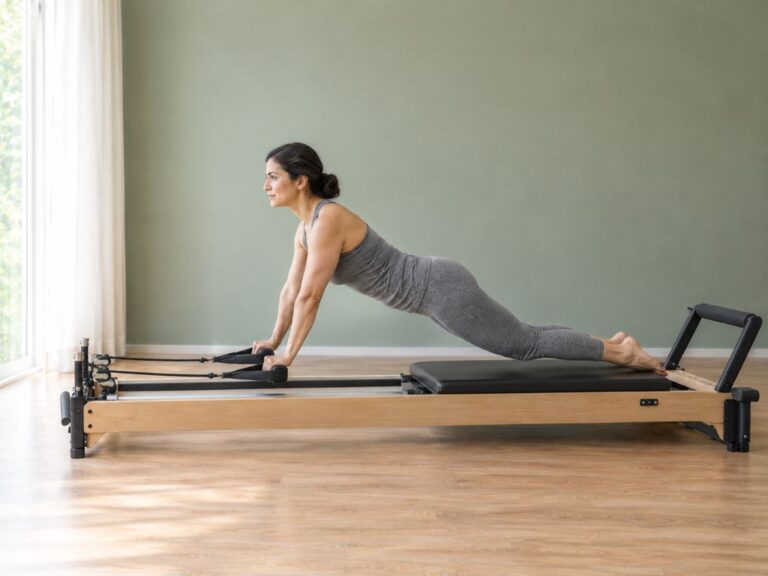
Common mistake: Letting the hips sag as the carriage extends, which takes the load off the core.
Benefit: Builds deep core and shoulder stability in one controlled movement.
2. Mountain climbers
Same plank position, alternate driving one knee toward the chest at a time in a steady rhythm. 20 total reps.
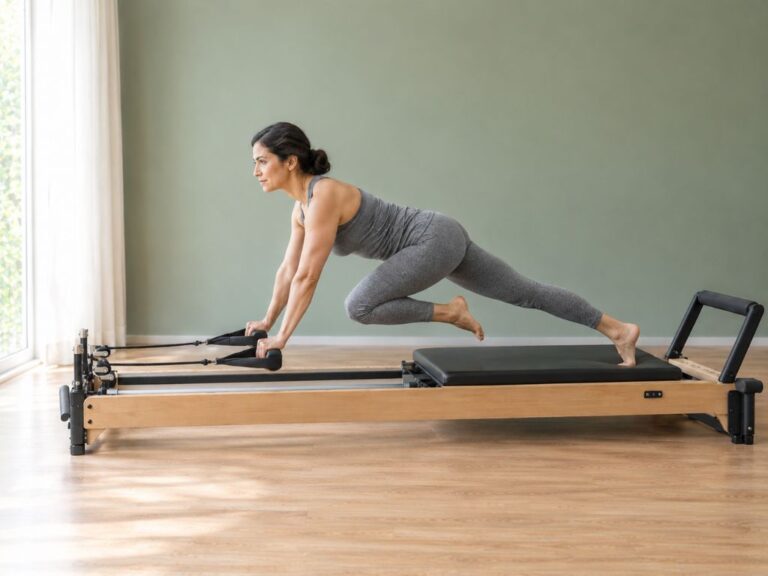
Common mistake: Rushing the pace and losing the plank line through the hips.
Benefit: Adds a light cardio element to an otherwise low-impact session.
3. Glute kickback
Kneeling on the board, one foot in the strap or against the resistance point. Extend the leg straight back against the resistance, then return with control. 12 reps per side.
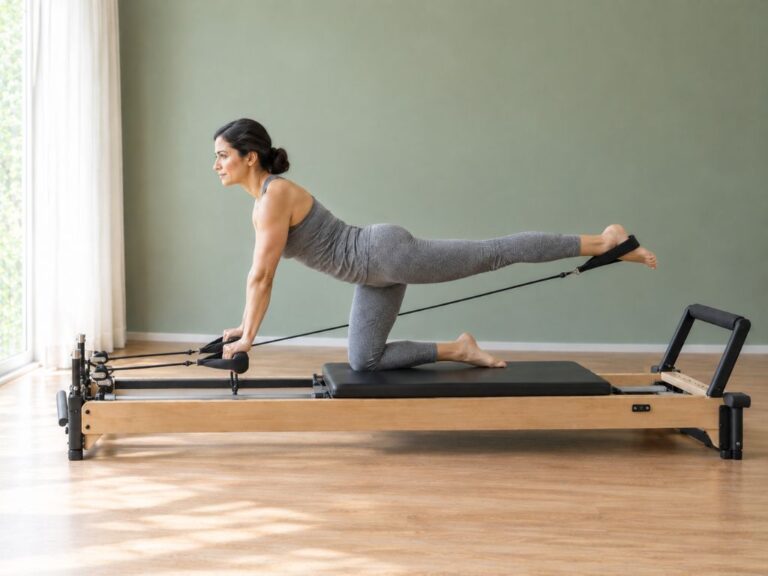
Common mistake: Arching the lower back to gain extra range instead of isolating the glute.
Benefit: Targets the glutes directly, an area most bodyweight-only routines undertrain.
4. Seated row
Sit on the carriage, feet braced, and pull the cords toward the ribs with elbows tracking back. Release with control. 12 to 15 reps.
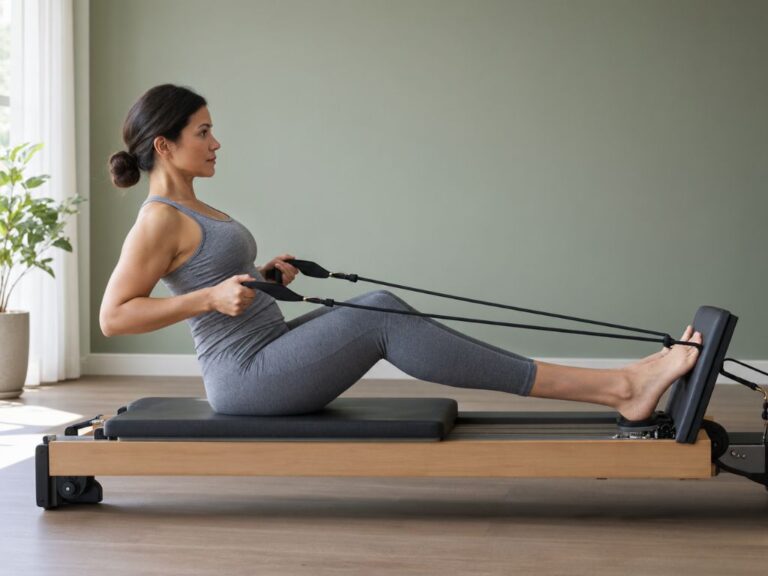
Common mistake: Using the arms alone instead of driving the movement from the shoulder blades.
Benefit: Works the back and posture muscles most lower-body-focused routines skip.
5. Seated side twist
Sit on the board with legs extended, torso tall. Rotate slowly from side to side, letting the carriage assist the glide. 10 reps per side.
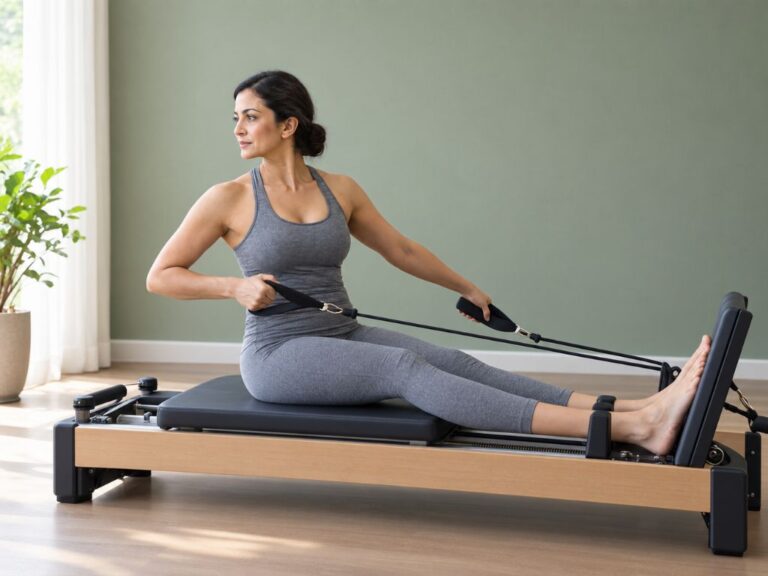
Common mistake: Twisting from the arms instead of rotating through the ribcage and waist.
Benefit: Builds rotational core control and finishes the session with gentle mobility work.
How often to do it
Three sessions a week is a solid starting point, with a day of rest in between to give the core and glutes time to recover.
Most people notice improved balance and core control within two to three weeks of consistent use, followed by changes in strength and posture.
Safety notes
Keep every movement slow and controlled. Resistance cords make it easier to rush reps using momentum, which actually reduces benefits and increases the risk of injury.
If you currently have knee, hip or back problems, check with a doctor or physical therapist before starting, as the sliding motion puts your joints through a different load pattern than static floor exercises.
How this pairs with other Pilates and strength formats
If a board is your first step toward reformer-style training, our piece on free wall Pilates workout is a nice zero-cost companion for those days when you don’t have a board.
For heavier resistance days, our back and bicep workout builds on the same back and glute muscles this routine targets, just with free weights instead of cords.
A closing thought
The reformer isn’t going anywhere, and if you already have studio access, nothing here replaces that experience.
But for a genuine, low-impact, full-body session at home, a Pilates board earns its price tag, and then some.
