


 By
By The insulin resistance meal plan that finally makes sense of blood sugar
You work out. You skip soda. And your last blood test still came back with a note about insulin resistance. What is actually going on?
It usually is not your effort. It is what your plate looks like at each meal. Below are 7 meals built to fix exactly that, plus the reasoning behind each one.
The short version
An insulin resistance meal plan pairs protein, fiber, and healthy fat with every carbohydrate to slow blood sugar spikes. Aim for around 25 to 30 grams of protein and 8 or more grams of fiber per meal, spread fairly evenly across the day. The 7 meals below show exactly how that plays out from breakfast through snack time.
What is insulin resistance actually doing to your body?
Insulin resistance now affects a large share of American adults, many of whom look and feel perfectly healthy from the outside.
Your cells stop responding efficiently to insulin. Your pancreas compensates by producing more of it just to keep blood sugar in range. Left unaddressed, that pattern can quietly pave the way toward type 2 diabetes.
According to the Cleveland Clinic, insulin resistance often has no symptoms at all until it progresses toward prediabetes or type 2 diabetes, which is exactly why the food on your plate matters even when you feel fine.
What is this meal plan actually trying to do?
Not eliminate carbs. Stabilize blood sugar.
Every meal raises blood sugar somewhat, and insulin is the hormone that ushers that sugar into your cells. Refined carbs eaten alone spike blood sugar fast, insulin surges to compensate, and that repeated surge is part of what drives resistance in the first place.
A registered dietitian at the Cleveland Clinic puts it simply: the goal is eating foods that require less insulin to process, giving your body a better chance to catch up.
Insulin-steady plate, at a glance
- Protein: chicken, fish, eggs, tofu, beans
- Fiber: vegetables, legumes, whole grains
- Healthy fat: olive oil, avocado, nuts
- Carbs: kept whole and fiber-rich, not stripped down and eaten alone
7 meals for a realistic insulin resistance meal plan
Same targets throughout: roughly 20 to 30 grams of protein and meaningful fiber at each sitting, built to keep blood sugar level for hours.
1. Olive oil veggie scramble

Roughly 21g protein, 6g fiber
Eggs scrambled with bell peppers, onions, and spinach in olive oil. A savory, protein-forward start that keeps blood sugar remarkably steady through the late morning.
2. Greek yogurt, walnut, and berry bowl

Roughly 19g protein, 7g fiber
Plain Greek yogurt topped with chopped walnuts and a small handful of berries. Simple, fast, and it holds you steady without any cooking required.
3. Salmon and chickpea salad
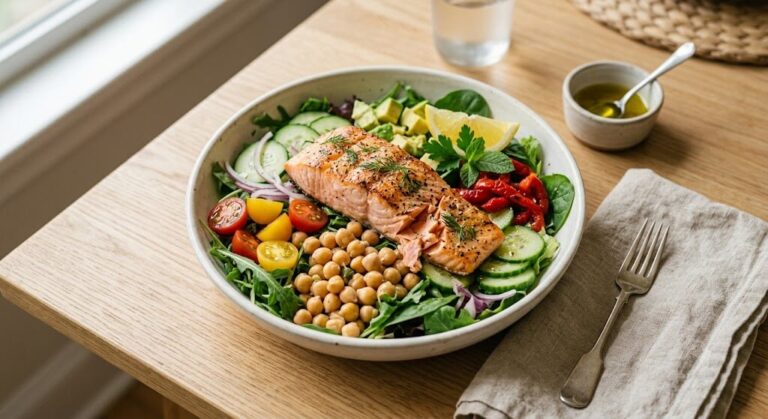
Roughly 30g protein, 10g fiber
A big salad built on grilled salmon, chickpeas, mixed greens, and an olive oil dressing. It travels easily for lunch and holds you comfortably until dinner.
4. Turkey and white bean soup
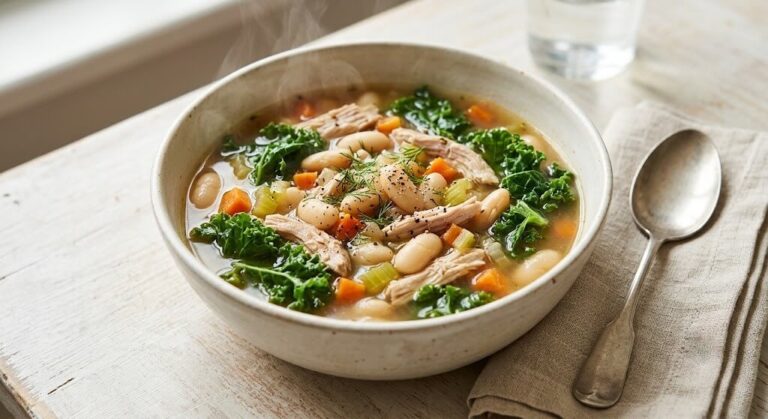
Roughly 24g protein, 11g fiber
Ground turkey simmered with white beans, carrots, and celery. The bean-driven fiber content here does most of the heavy lifting for blood sugar stability.
5. Sheet pan chicken thighs with brussels sprouts and farro
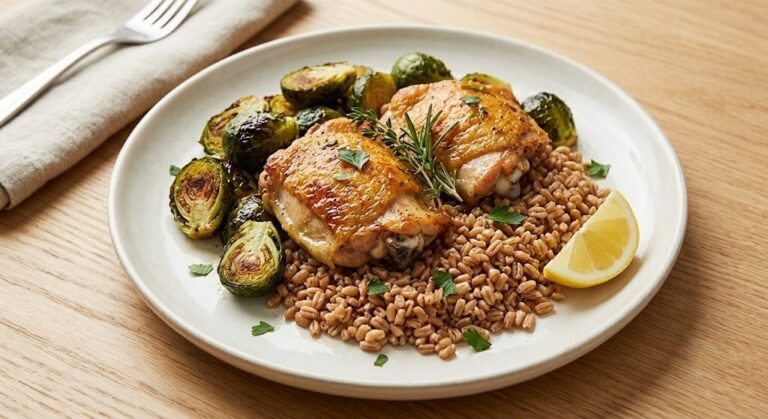
Roughly 33g protein, 8g fiber
Roasted chicken thighs, brussels sprouts, and a small portion of farro, all on one pan. Fast on a weeknight, and it checks every box without much cleanup.
6. Baked cod with roasted vegetables and lentils
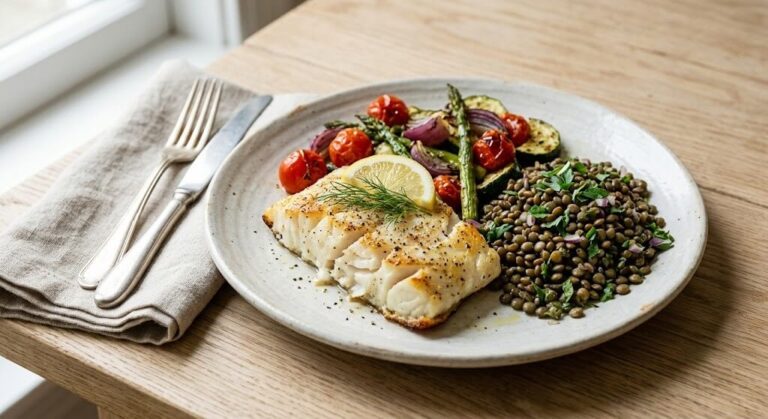
Roughly 27g protein, 9g fiber
A lighter dinner option built on baked cod, roasted seasonal vegetables, and a side of lentils for extra fiber and staying power.
7. Cucumber slices with hummus

Roughly 8g protein, 5g fiber
A snack that does far more for blood sugar than crackers or pretzels. Pair it with a hard-boiled egg on days when you need something more filling between meals.
Curious how eating windows fit into this? Our intermittent fasting good for weight loss piece pairs naturally with this approach, and our keto diet for weight lossguide covers a lower carbohydrate angle if you want to go further.
What habits quietly work against you?
Sugary beverages, even fruit juice marketed as healthy, remain one of the fastest ways to spike blood sugar. Meals built almost entirely around white bread, white rice, or pastries, with little protein or fiber alongside them, send blood sugar swinging widely through the day. And long stretches without eating, followed by one large meal, often push insulin higher than smaller, steadier meals would.
None of this requires eliminating entire food groups. It just means building most days around the steadier option.
Does exercise actually matter here?
Yes, and more than most people expect. Strength training helps your muscles use blood sugar more efficiently, which means the meals you are already eating go further toward stabilizing insulin. If low energy or muscle loss has been part of your experience, our guide on muscle loss symptoms after 40 explains how building strength supports this exact metabolic shift.
How long until you actually see results?
Reversing insulin resistance is measured in months, not days. Many people give up around week two, right when the scale has not budged yet.
Energy and steadier blood sugar often show up first, sometimes within a few weeks. Lab markers like fasting insulin usually take a few months of consistent eating to shift in a meaningful way. Every balanced meal is doing more than it feels like in the moment.
The bottom line
None of the 7 meals above require a special diet, a subscription, or willpower you don’t already have. They just give your body less insulin to fight against, meal after meal.
Pick two or three to start with this week. Repeat them until they feel automatic, then add the rest in once they do. That is genuinely how an insulin resistance meal plan turns into a habit instead of one more thing you tried for a week and dropped. If steadier blood sugar is just one piece of what you’re working on, you’ll find more of this same evidence-based, no-nonsense approach across Way Fit Hub, covering everything from strength training to fat loss to everyday nutrition.
