


 By
You’ve probably done crunches hundreds, maybe thousands, and the waistband still fits exactly the same. It’s not a willpower problem. It’s a targeting problem, which is why HIIT exercise for belly fat keep showing up in research while endless sit-ups quietly do not.
In this guide, I’ll tell you what HIIT can and can’t do for your abs, which moves hold their own, a 20-minute routine you can do at home, and the mistakes that stop most people by week three. Not sure HIIT is even your style? I compared it with two other popular options in my compare hiit, pilates, and barre for a full-body workout article.
I’m a fitness enthusiast, not a doctor, so I’ll point you to the studies instead of asking you to just trust me.
What HIIT can do for belly fat, and what it can't
Start with the uncomfortable truth: your body doesn’t pull fat from the areas where you train.
In one well-known study, 24 adults performed seven ab exercises, two sets of 10, five days a week for six weeks. Their ab endurance improved. Their belly fat measurements did not change in any meaningful way. So, no HIIT workout for abs will melt the fat sitting on top of the muscle. What HIIT can do is increase how much total fat you lose, and belly fat is part of that total.
A 2018 meta-analysis in Sports Medicine pooled 39 studies and 617 adults. HIIT significantly reduced total, abdominal, and visceral fat, with no difference between men and women. Visceral fat is the deep fat that surrounds your organs, and it’s the type that researchers are most concerned about. That is why a smaller waist can matter for far more than how your jeans fit.
One caveat worth knowing. The authors noted that the abdominal and visceral changes showed up mainly when fat was measured with CT or MRI scans. Your tape measure and mirror can lag behind what is happening inside.
Is HIIT exercise for belly fat better than steady cardio?
Honestly, it’s closer than most headlines suggest.
A 2019 review in the British Journal of Sports Medicine literally asked in its title whether interval training is the magic bullet for fat loss. The broad answer from the data is that interval training and steady moderate cardio produce fairly similar fat loss, and HIIT’s real edge is time.
A newer meta-analysis of low-volume interval training in adults with overweight or obesity found that low-volume HIIT beat steady cardio for visceral fat. The authors rate the certainty of that evidence as low, so I treat it as promising rather than proven.
You will also see claims that HIIT keeps you burning fat for 24 hours. The afterburn effect is real, but it is small. Think of it as a bonus, not the plan. My takeaway is simple. Pick the style you will actually repeat. If 20 minutes of intervals fits your week better than 45 minutes on a bike, HIIT wins on practicality alone.
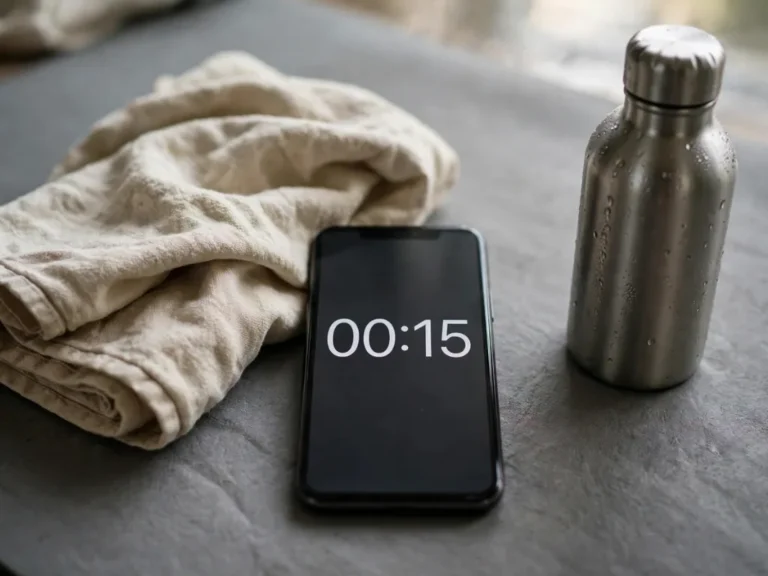
How intense should HIIT be to lose belly fat?
HIIT means short bursts of very hard effort with recovery in between. The trap is believing every second has to be an all-out sprint.
Get this part right and HIIT exercise for belly fat becomes far easier to stick with. On a 1 to 10 effort scale, aim for an 8 or 9 during the work intervals. You should only manage a word or two, not a full sentence. During rest, your breathing should settle but not fully return to normal.
Here is the interesting part. In that same meta-analysis, training above 90 percent of peak heart rate did better for whole-body fat, while lower intensities did better for abdominal and visceral fat. In plain terms, you do not need to wreck yourself on every round.
Always start with five minutes of easy movement first: marching in place, arm circles, bodyweight squats. Cold joints and max effort are a bad mix.
The best HIIT exercises for stomach fat (and why they work)
The best HIIT exercises for stomach fat are not ab exercises. They are big, full-body moves that recruit the large muscles of your legs, hips and back, which pushes effort and calorie burn far higher than a crunch ever will.
Your core still works hard stabilizing your body through every one of them. You get that firm, worked feeling without relying on it to do the fat-loss job.
Squat jumps. Drop into a squat, then explode upward and land softly. Low-impact swap: a fast bodyweight squat with a heel raise at the top.
Mountain climbers. From a high plank, drive your knees toward your chest in a quick running pattern. Low-impact swap: slow the pace and step each foot forward instead of driving.
High knees. Run in place and bring your knees to hip height with pumping arms. Low-impact swap: a brisk march with a big arm swing.
Skater hops. Leap side to side, landing on one foot and sweeping the other leg behind you. Low-impact swap: a lateral step with a deep reach toward the floor.
Burpees. Squat, hands to the floor, jump or step back to plank, return, and finish standing. Low-impact swap: step back to plank and skip the jump entirely.
Plank jacks. From a forearm or high plank, hop your feet wide and back in. Low-impact swap: step one foot out at a time.
Quality matters more than speed. A slower, controlled rep that keeps your form intact beats a sloppy one every time.
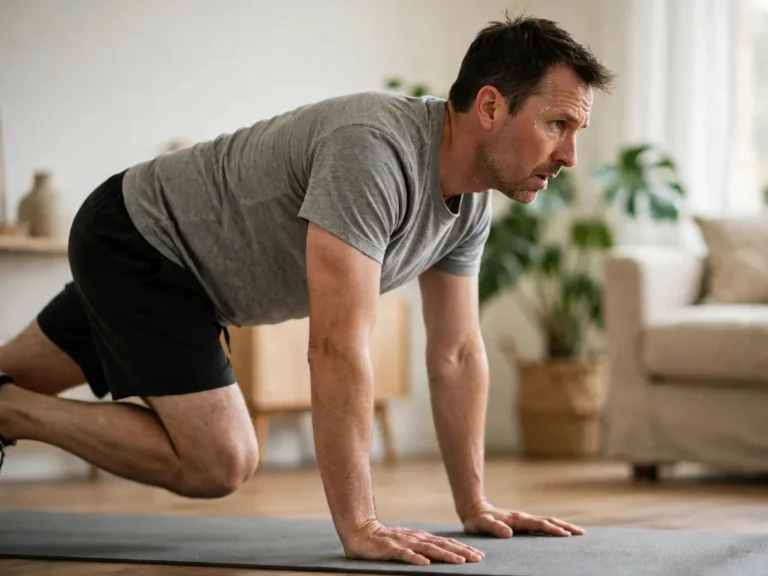
A 20-minute HIIT workout for belly fat you can do at home
This is the exact session I would hand a friend who wants HIIT exercise for belly fat without a gym membership. You need a timer, a bit of floor space and a mat if your floor is hard. No equipment.
Warm up for five minutes first. Then work through the six HIIT exercises for stomach fat above in the order I listed them, going hard for 40 seconds and resting for 20 seconds on each. That is six minutes per round.
Do three rounds with a full minute of rest between them. The main block adds up to exactly 20 minutes. Finish with three to five minutes of slow walking and gentle stretching for your hips, hamstrings and chest.
When the last round feels like the first one did, you have found the right intensity. When it feels like a collapse, trim the work time to 30 seconds next time.
HIIT for beginners
If you are new to exercise or coming back after a long break, flip the ratio: 20 seconds of work and 40 seconds of rest. Use the low-impact swaps for every move.
Do two rounds with a minute of rest in between, about 13 minutes in total. Add five seconds of work time each week, then a third round once it feels manageable.
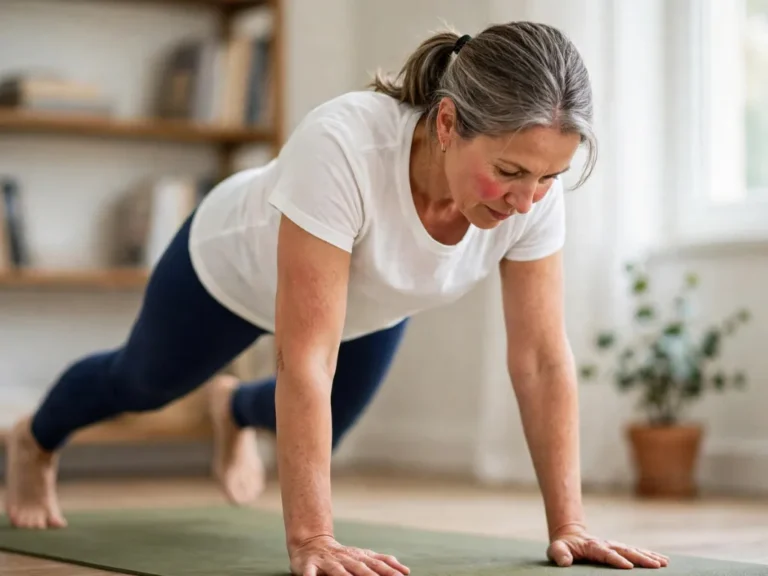
How often to do HIIT exercise for belly fat
Two to three sessions a week is plenty for most people, with at least one full day between them. Hard intervals need recovery to do their job.
For context, the CDC’s adult guidelines call for at least 150 minutes of moderate activity a week plus two days of muscle-strengthening work. HIIT can fill part of that, but it should not be the whole week.
On the days in between, strength training and easier movement do the heavy lifting. A walk is perfect, and so is a Pilates session if you want something that challenges you differently. If you are curious how hard Pilates really is, I broke it down in my article on is Pilates a high intensity workout.
Here is what a balanced week can look like:
| Day | Session | Effort |
|---|---|---|
| Monday | 20-minute HIIT workout | Hard |
| Tuesday | Full-body strength training | Moderate to hard |
| Wednesday | 30-minute walk or easy ride | Easy |
| Thursday | 20-minute HIIT workout | Hard |
| Friday | Full-body strength training | Moderate to hard |
| Saturday | Pilates, yoga or a long walk | Easy to moderate |
| Sunday | Full rest | None |

Five mistakes that quietly stall your results
Most people who stall on HIIT exercise for belly fat are not doing too little. They are making one of these five errors.
Doing HIIT every day. More intensity is not more progress. Without recovery, your sessions get sloppier, your joints complain, and your motivation tanks right around the third week.
Skipping strength training. Cardio alone can cost you muscle along with fat. Strength work protects the muscle you have, which shapes how your waist and body look as the fat comes off.
Out-eating the workout. A 20-minute session burns a modest amount of energy, and a large post-workout snack can erase it without you noticing. Aim for protein and fiber at most meals and keep the reward food as a treat, not a rule.
Ignoring sleep and stress. Short nights and constant stress make hunger louder and consistency harder. If your workouts are perfect and your sleep is a mess, fix the sleep first.
Judging progress by the scale alone. Weight swings daily with water and food. Check your waist measurement, how your clothes fit and your workout performance every two to four weeks instead.
Who should check with a doctor before starting HIIT
HIIT is demanding by design. If you have a heart condition, high blood pressure, joint problems, are pregnant, or have been inactive for a long time, talk to your doctor before starting.
Stop immediately if you feel chest pain, dizziness, or unusual shortness of breath. Pain in a joint is also your cue to stop and swap in a lower-impact move.
The bottom line on HIIT exercise for belly fat
You cannot spot-reduce fat, and no single move will flatten your stomach. HIIT exercise for belly fat works because it helps you lose fat overall, in less time, with big full-body moves you can do at home.
Start with the beginner version if you need to. Do it two or three times a week, lift weights on the days between, and give it a full month before you judge the results. Pick your first session for this week and put it on the calendar today.
