

 By
By Jenna had three sets of dumbbells before she could complete an arm workout with them. Not because there was a lack of effort. Because every routine she found online was either a bodybuilding split that bugged her for a week, or a bodyweight routine that never changed how her arms actually looked.
What ultimately worked was shorter and slower than she expected: light weights, high reps, and the controlled, pulsating movements Pilates is built around.
That combination is also what most people are really looking for. Pilates arm workouts with weights, not without them, is the version that real explorers come back to again and again, because it is the one that visibly changes how the arms look and feel.
Why weights change what a Pilates arm workout can do
Body weight alone can place so much demand on your arms, as there is a limit to resistance when gravity is the only force. If you’ve tried our free Wall Pilates workout, you’ve already felt the core and upper legs move, and the arms hit it even harder.
A light pair of dumbbells, or even wrist weights, changes the math. You’re still moving slowly and controlled, the way Pilates tells you to, but now there’s real resistance against which the muscles have to work on every single pulse.
This is why so many searchers specifically look for the weighted version. It’s not that bodyweight Pilates doesn’t work, it’s that adding lighter weights shows arm-specific results faster.
Does this actually work, or is "toning" just marketing?
This is a fair question, and worth answering honestly before you spend 15 minutes a day on it.
Exercise science is clear on one thing: You can’t choose where your body loses fat. ACE Fitness explains that targeted exercises don’t burn fat from that specific spot, because fat loss occurs throughout the body, not in one area at a time. But that’s not the same question as whether a Pilates arm workout creates real, visible definition. This occurs through a different mechanism than reducing fat.
Repeated, controlled resistance work strengthens and firms the actual muscles underneath, creating a defined look that becomes visible. NASM’s guide to arm-sculpting exercises confirms this: Consistent, targeted resistance training on the biceps, triceps, and forearms is what builds the muscle definition people think of when they say “toned.”
In clear words: This workout will not reduce arm fat on its own. Combined with your overall activity and eating habits, this will really change the way your arms look and feel. This is an honest answer, not a sales pitch.
What you need
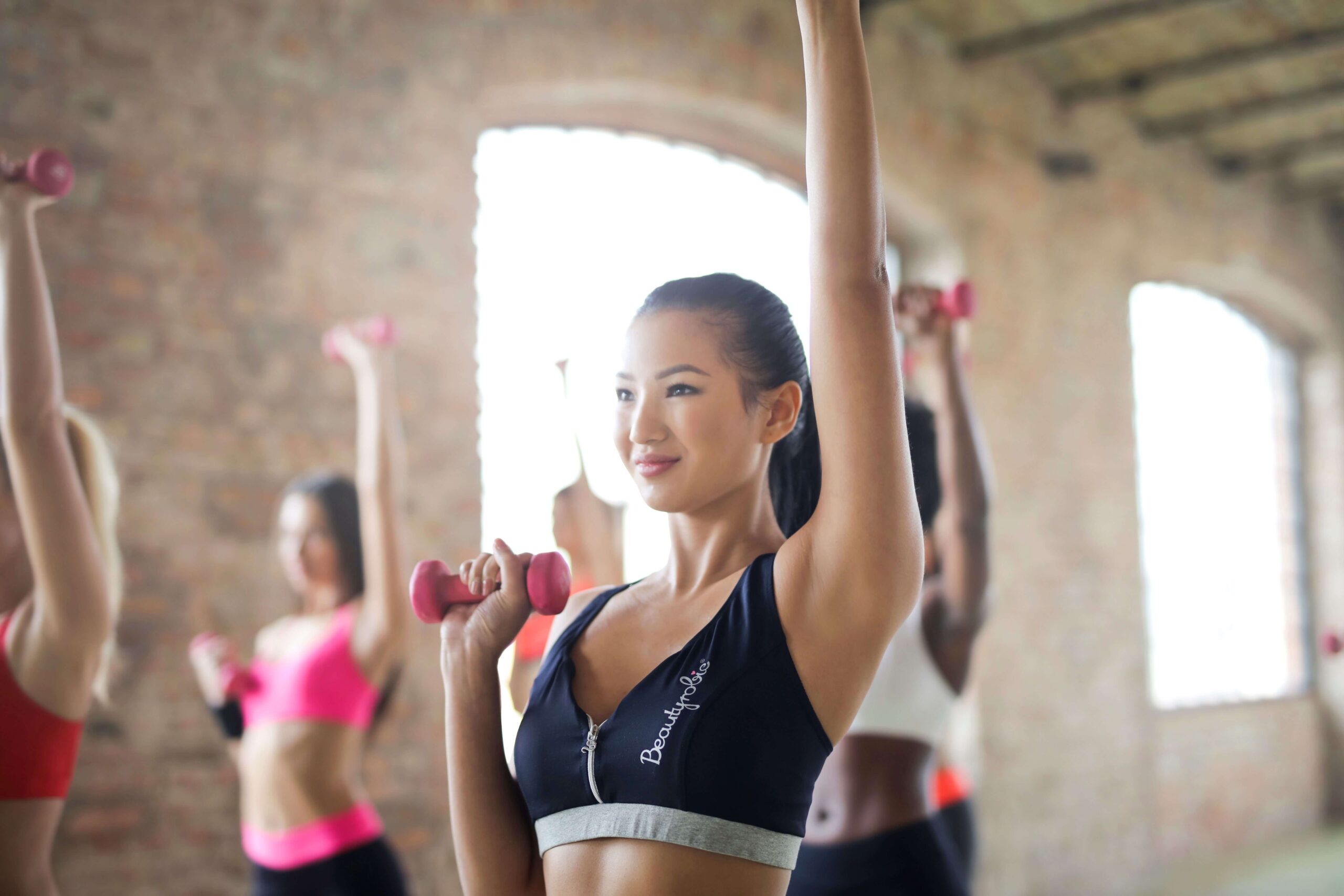
A pair of light dumbbells, 1 to 3 pounds each, is the sweet spot for this style of workout. Too heavy and you lose the controlled pulse which makes it Pilates rather than strength training.
If you have wrist weights these work as an alternative, and a resistance band is also a reasonable stand-in. A small piece of floor or standing space is all the room you need.
The main routine
Bicep curl pulses
Stand tall, weights at your sides, palms facing forward. Curl halfway up and pulse in small, controlled movements for the set instead of a full curl. 20 pulses.
Common mistake: Swinging the weights using momentum from the shoulders instead of isolating the bicep.
Benefit: Builds bicep endurance and definition without the joint strain of a full heavy curl.
Tricep kickback pulses
Hinge forward slightly at the hips, elbows bent at your sides. Extend the forearms back and pulse in a small range at the top. 20 pulses.
Common mistake: Dropping the elbows during the pulse, which shifts the work off the triceps.
Benefit: Targets the back of the arm, the area most people specifically want more definition in.
Chest press pulses
Arms extended in front at shoulder height, weights facing each other. Pulse the arms together in a small range, squeezing through the chest and shoulders. 20 pulses.
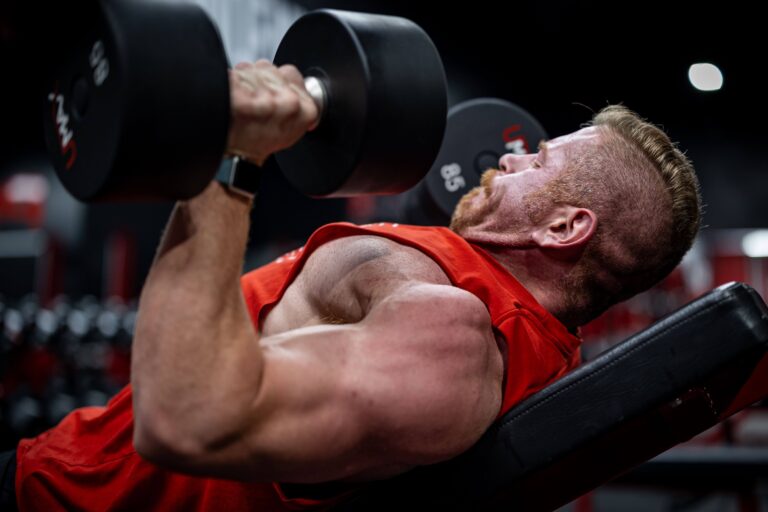
Common mistake: Letting the shoulders creep up toward the ears instead of staying relaxed and down.
Benefit: Works the chest and shoulders alongside the arms for a more complete upper-body result.
Arm circles
Arms extended out to the sides at shoulder height. Make small, fast circles for 20 seconds forward, then 20 seconds backward.
Common mistake: Letting the arms drop below shoulder height as fatigue sets in, which reduces the burn.
Benefit: Builds shoulder endurance and is often the move people feel working the very next day.
Windshield wipers
Arms extended in front at shoulder height, palms down. Rotate the forearms side to side like a windshield wiper, keeping the upper arm still. 20 reps each direction.
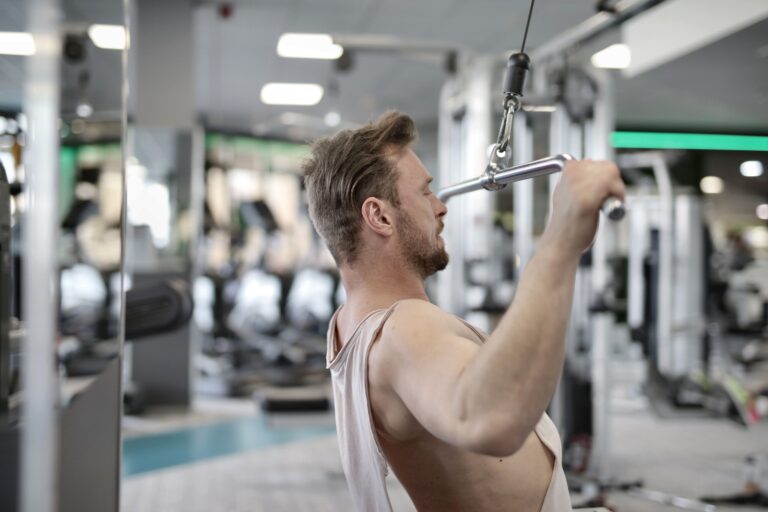
Common mistake: Rotating from the shoulder instead of the forearm, which turns this into a different exercise entirely.
Benefit: Targets the forearm and outer arm, an area most arm routines skip completely.
Prefer no weights? Here's the modification
Every trick above works even with empty hands. Keep exactly the same pulse, range and rep count, there will be no external resistance for your arms to work against.
This version is a reasonable starting point if you’re brand new to arm-focused work, or are recovering from a wrist or shoulder problem. Once it feels too easy, that’s your cue to add back lighter weights.
How often to do it
Three to four sessions a week are realistic and effective for this style of workout, with at least one day of rest between sessions to allow the muscles to recover.
Most people feel their arms become more defined within two to three weeks of consistent exercise, with visible changes usually visible after a few weeks.
Safety notes
Keep activities short and controlled throughout. The pulse is the whole point, a larger, faster range of motion turns this into a different, higher-impact exercise.
If you feel sharp pain in the wrist, elbow or shoulder at any point, stop and lower the weight, or return to the no-weight version until the joint is ready.
How this pairs with other Pilates and strength formats
If you’ve been chasing the results of your reformer sessions without much luck, our article on why Pilates reformer workout results stalls covers the same principles of controlled resistance that make this arm routine work.
For heavier resistance days, both our back and bicep workout and dumbbell workout guides build on the same arm muscles that this routine target, only with heavier loads and fewer reps.
A closing thought
Jenna’s dumbbells didn’t need to be heavy. They needed a routine that would actually use them properly.
Fifteen minutes, a light pair of weights, and the same pulse-based consistency that Pilates has always relied on is what has, and continues to, make a difference.
