

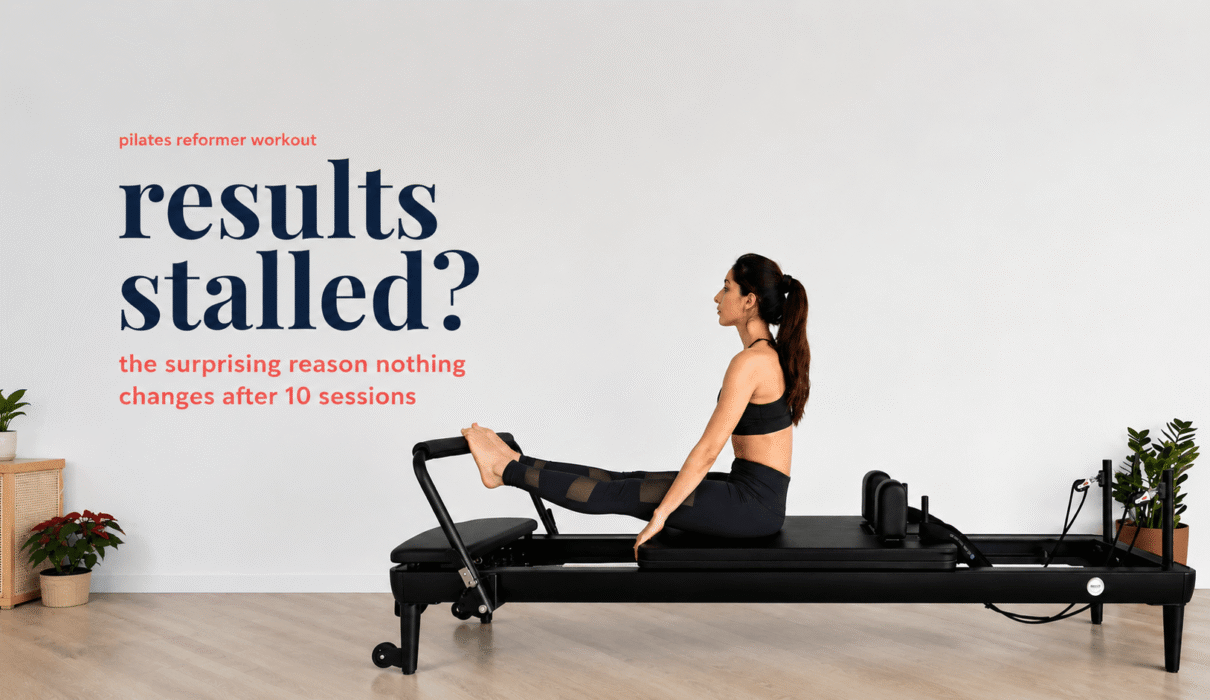
 By
By Pilates reformer workout: the fix for stalled results
Ten sessions in, I stood in front of the mirror after class and realized that nothing had changed.
My legs were still a little shaky from the last set of footwork. By the end of class I had the same familiar burning sensation in my arms that I always had. But the reflection looked exactly the same as it did on the first day.
If you’ve been consistently showing up to your Pilates Reformer workout and you’re looking at the same body in the mirror, I want you to hear this first: You’re not doing it as wrong as you probably think.
There is a specific, definite reason why this happens around session 10. Almost no one explains it, so most people silently assume that the workout has stopped working, or that they are the problem. Neither is true.
Why a pilates reformer workout plateau hurts even consistent people
Joseph Pilates, the man behind this method, famously promised that after 10 sessions you feel the difference, after 20 you see it, and after 30 you have a new body. This quote is repeated in almost every studio and blog, and it sets a very specific expectation.
So when session 10 comes and goes and nothing obviously changes, it feels personal. It’s easy to think if your form is bad, if you’re not working hard enough, or if reformer Pilates isn’t made for your body.
I went through this exact cycle last year, around the same time I was troubleshooting a completely different stall problem in my dumbbell workouts. The pattern turned out to be almost identical. The workout was not broken. Inside it was my progress.
The real reason why your pilates reformer workout stops changing your body
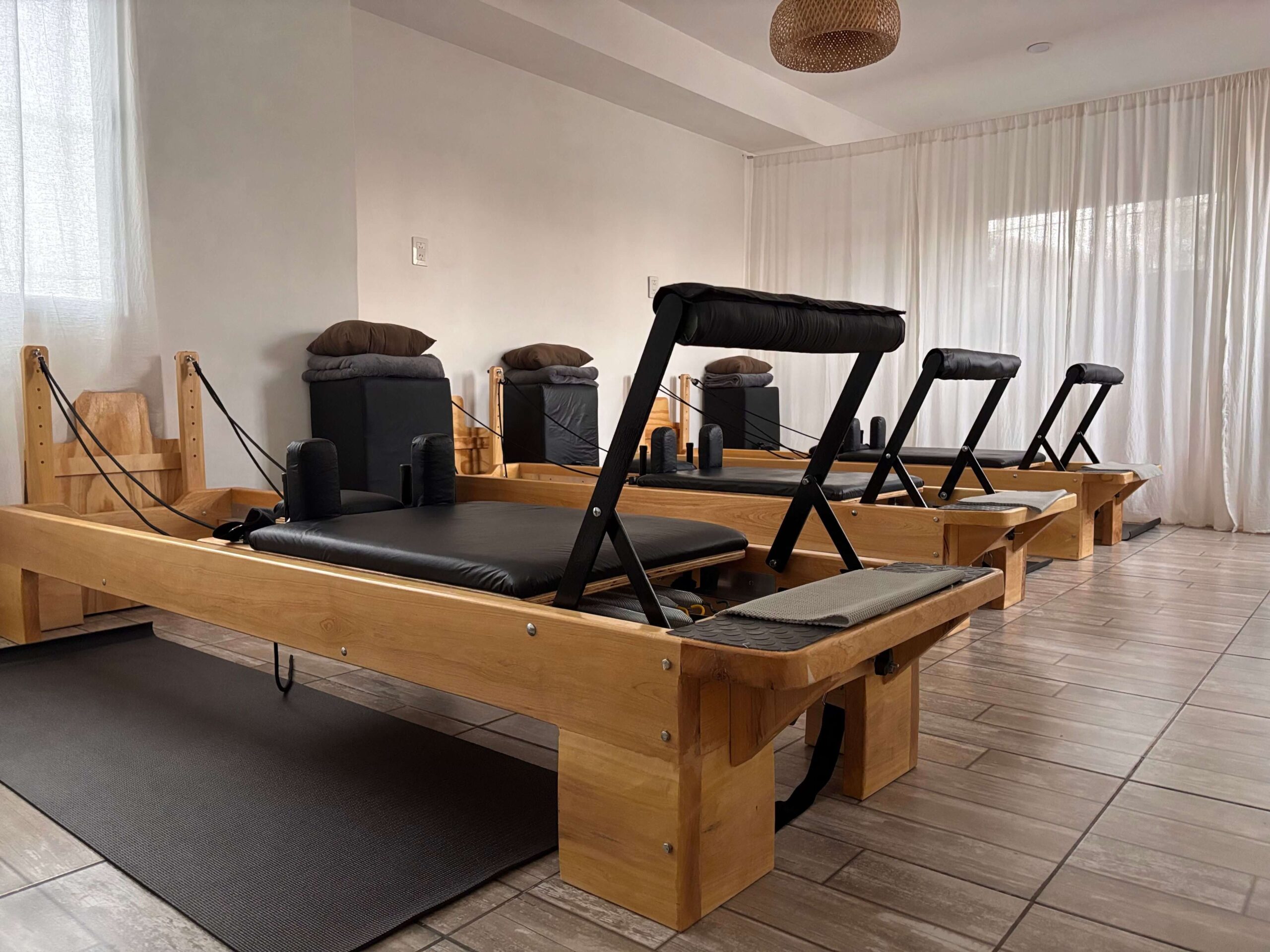
A corrector works by adding spring resistance to controlled, precise movements. That resistance is what makes the workout effective in the first place. The Cleveland Clinic explains that Pilates builds muscle tone, flexibility and strength because resistance and control work together.
Here is the part that is rarely mentioned. Your body is remarkably good at becoming efficient at whatever weight you repeat. Once your muscles learn to move at a certain spring tension, that same tension ceases to be the stimulus for change. You are still working. You’re not working against anything new.
Trainers sometimes call this the body’s adaptation response, and it is generally the same mechanism behind fitness plateaus in strength training. NASM specifically recommends stepping up training every three to four weeks to stay ahead of the curve. Reformer classes rarely create that progress for you automatically, especially in a group setting where the springs are set once at the beginning of the class.
This is why some sessions seem harder than others, even if nothing has changed on the machine. Fatigue, sleep, stress, and hydration all change how difficult the same resistance feels. A class that feels difficult is not proof that you have made progress. This is proof that you were tired that day.
The solution that finally revamped my pilates reformer workout results
The improvement was smaller than I expected, and it didn’t involve adding more classes to my week.
I started tracking my spring settings for three or four key exercises, the same way I track weights on dumbbells. Footwork, the hundred and long stretch series became my standards. Every two weeks, I’d ask myself a question: Can I complete these with a little less spring support, or a little more resistance, while still keeping my form clean?
Once I made that one change, results started coming back within a few weeks. I also borrowed a trick from How to Fix a stalled Push Day Workout: rotating into an unfamiliar exercise variation every couple of sessions so that my body never fully settles into autopilot.
If your studio or app offers different class formats, mixing in a session like Wall Pilates on a day off, or occasionally comparing how Reformer stacks up against other formats in this HIIT, Pilates, and Barre comparison can also help you notice where your own routine has quietly slipped by.
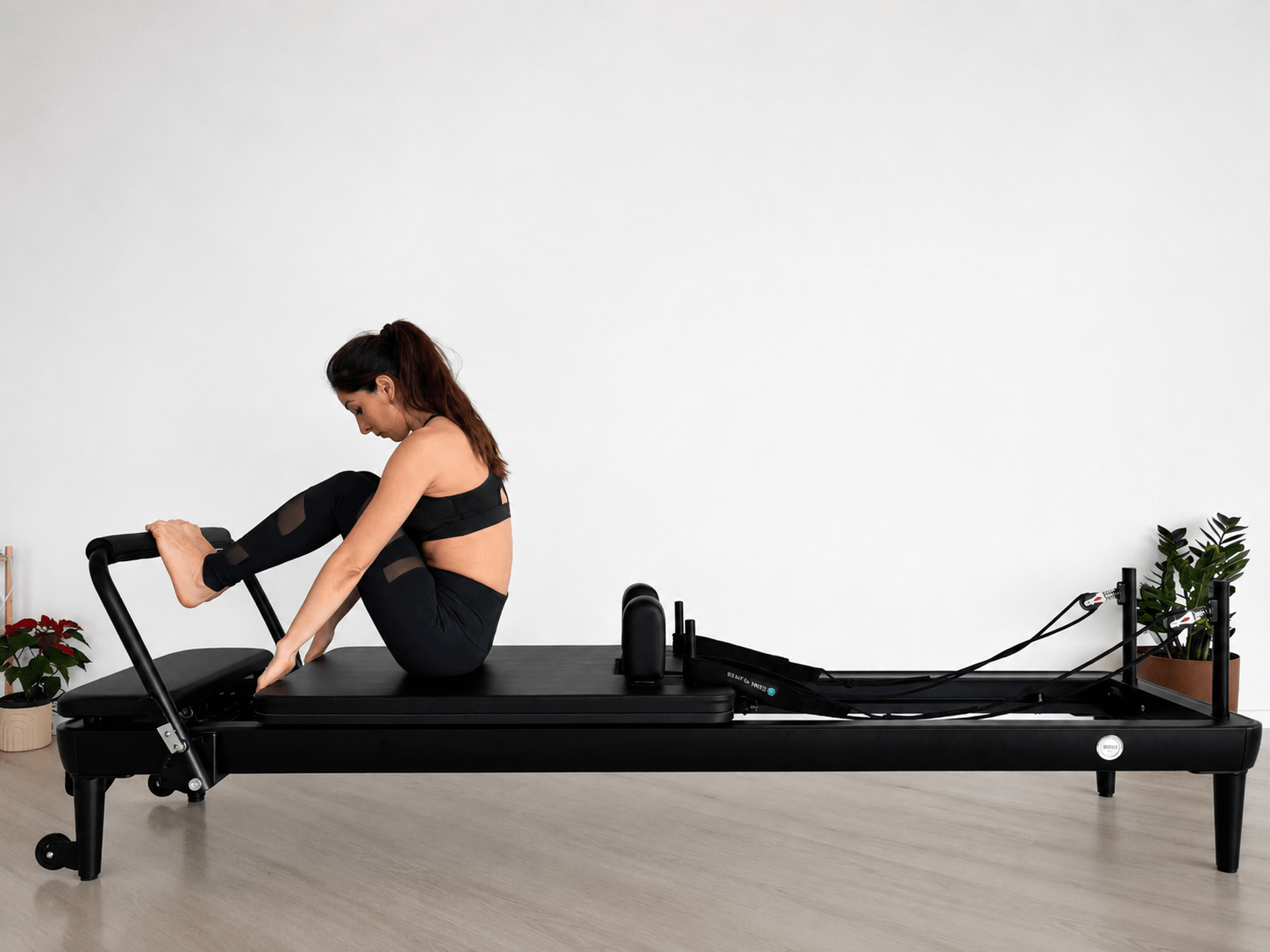
What a stalled pilates reformer workout is quietly telling you about recovery
Progress is only half the picture. The second part is whether your body really has what it needs to rebuild between sessions.
Muscles adapt during recovery, not during workouts. Harvard Health says that people who do regular resistance-style training often need more protein than the standard recommended amount to support that repair process. If your plate hasn’t changed as your training progresses, recovery is a reasonable place to look next.
Here sleep is equally important. If you’re curious about strengthening the nutrition side of your routine, this anti-inflammatory diet meal plan is a gentle place to start, as it focuses on foods that support recovery without requiring a complete overhaul.

How soon should you realistically expect to feel it working again
Once you’ve made real progress, patience still matters. A systematic review published through the National Institutes of Health found that Pilates reliably improves core muscle strength and activation, but the study behind that conclusion was based on weeks of consistent practice, not one or two sessions.
Expect early wins first. Better breathing coordination, less tension in your lower back, and stable balance often appear before anything you see in the mirror. Give a new progression plan at least three to four weeks before deciding whether it’s working or not.
The Mayo Clinic presents this type of core work as part of a complete fitness program rather than a stand-alone fix, which is a helpful reminder if reformer Pilates workout is the only movement in your week.
A few honest checks before you blame yourself
Before you assume the problem lies with your body, walk through a short gut check.
Note if your spring settings have changed even once in the past month. Notice whether the class seems routine rather than actually challenging by the last set. Pay attention to whether your meals and sleep are in line with the training you are doing.
If the answer to all three is no, it is not a failure. That’s just the missing piece, and now you know exactly where to look.
One caution is worth stating clearly: pain that goes away in a few days is normal adaptation. Severe pain, joint discomfort, or pain that persists for more than 72 hours is unbearable. Rest and if this happens, consult a doctor or physiotherapist.
The next 10 sessions can look different
You didn’t imagine the plateau, and you didn’t fail at the workout. Reformer Pilates works. It just needs a reason to keep working, just like any other type of resistance training.
Track your springs. Rotate in something unfamiliar every two weeks. Feed the recovery side of the equation just as seriously as the workout side. With those three pieces in place, give it another 10 sessions and pay attention to what changes this time.
This article is for general informational purposes and is not a substitute for professional medical advice. Talk to your doctor or qualified physical therapist before starting a new exercise program, especially if you have an injury, a chronic condition, or are recovering from surgery.
