

 By
By Ask ten different people what military calisthenics really means, and you’ll probably get ten different answers.
Some people picture the Murph workout, a brutal Memorial Day tribute WOD made entirely of bodyweight movements. Others think it’s the name of a fitness app they saw in a commercial. Some people remember doing push-ups in gym class until their arms shook and assume it counted.
None of this is absolutely wrong, but none of it is the whole picture either. Without marketing spin, here’s the real answer.
What is military calisthenics, in plain terms
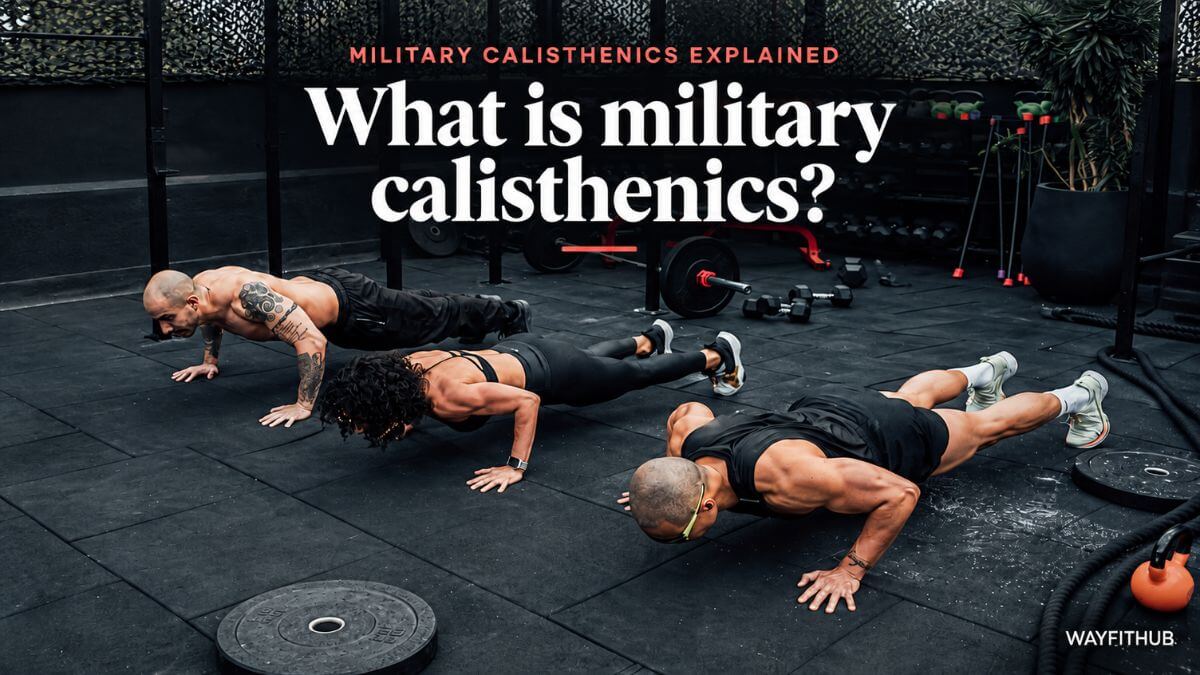
Military calisthenics is structured bodyweight training built around the same movements that the armed forces have used for decades to build and test physical readiness. Push-ups, sit-ups, pull-ups, planks and running form the core, performed in timed or graded formats rather than random repetitions.
The word calisthenics itself comes from the Greek root meaning beauty and strength, which is an fitting description of a training style that requires nothing more than your own body and a piece of ground to work out.
Where it actually comes from
For decades, the Army Physical Fitness Test built its entire scoring system around three simple events: push-ups, sit-ups, and a two-mile run. That’s the combination most people still envision when they hear the phrase military calisthenics, and it has honestly earned that reputation.
The test has evolved since then. As of June 2025, the Army now uses the Army Fitness Test, which includes strength and agility events like the deadlift and sprint-drag-carry, as well as classic bodyweight staples like the hand-release push-up and timed plank. You can view full details of current testing directly from the Department of Defense’s Human Performance Resource Center (HPRC), the most reliable source available for how modern testing actually works.
Even with the addition of new events, bodyweight calisthenics never went away. It is still the foundation upon which everything else is built.
What counts as a military calisthenics exercise
The list is short on purpose. Simplicity is the whole point, as these movements can be worked anywhere, for any group size, with zero equipment needed.
- Push-ups, the most recognized movement of the entire range
- Sit-ups and planks for core endurance under fatigue
- Pull-ups, less universally tested but still a key part of upper-body standards
- Squats and lunges for lower body strength and mobility
- Running almost always includes a cardiovascular component
Nothing on that list requires a gym membership. This is not an accident, it is design.
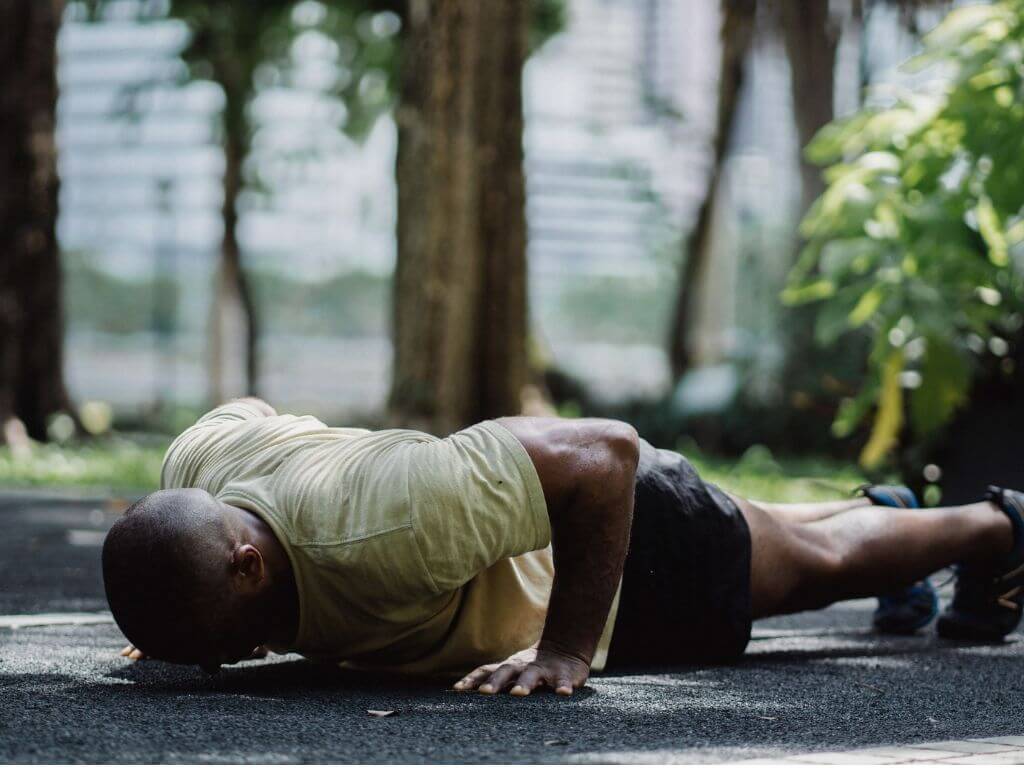
If push movements like this are already part of your own split, my push day workout guide covers why chest and shoulder progress stalls for a lot of people, and the fix applies just as much here.
How this is different from regular calisthenics
Recreational calisthenics, the kind you see on fitness Instagram with muscle-ups and one-arm push-ups, is usually about skill progression and aesthetics. Military calisthenics work is completely different.
It is scalable, repeatable among thousands of people simultaneously, and effective under fatigue, stress, and time pressure. In this system no one cares what a push-up looks like. What they care about is whether you can still run two miles in full gear.
That difference in purpose is actually the entire answer to why this training style looks the way it does. Form follows function, and function here is preparation for battle, not Instagram content.
Why the discipline still matters outside the military
You don’t need to be a recruiter to get real value from this style of training. The appeal to civilians is almost the same reason the military relies on it in the first place.
No equipment required means no excuse to skip a session. A graded, structured format removes the guesswork that causes so many home workouts to quietly fizzle out after a few weeks. And functional strength, the kind that persists under fatigue, transfers to real life far better than an isolated bicep curl ever will.

If you want to get a feel for what a military-style benchmark workout actually demands, the Murph Workout is a civilian-accessible version of that exact idea, built entirely around the same bodyweight movements covered here.
A basic military-style calisthenics circuit to try
You don’t need a base or drill sergeant to get a feel for the format. A simple version looks like this, repeated for two or three rounds with minimal rest between exercises.
- Do as many push-ups as you can in one minute
- Do as many sit-ups as possible in one minute
- Plank, held for one minute
- A short race or sprint interval between rounds
Track your numbers every time you do this. Seeing that count go up over a few weeks is honestly one of the more satisfying progress markers in fitness, precisely because there’s nowhere to hide a bad rep.
Where this leaves you
Military calisthenics earns its reputation honestly. For decades service members have relied on nothing more than push-ups, sit-ups, pull-ups, and the open field to stay combat ready, and it’s that simplicity that still works for anyone else willing to try it.
You don’t need a base, a uniform, or a single piece of equipment to get started. All you need is a plan, and now you have the outline.
FAQs
Is military calisthenics good for beginners?
Yes, more than most people expect. You control your own pace, and every movement scales down naturally, fewer reps, shorter holds, walking instead of running.
Do you need any equipment at all?
No. That is really the entire point of the category. A patch of flat ground is enough.
Is military calisthenics the same as CrossFit?
Not quite. CrossFit blends calisthenics with weightlifting and varied equipment. Military calisthenics stays intentionally equipment-free and standardized for testing purposes.
How is this different from a normal home workout?
Structure and standards, mainly. A normal home workout is flexible by design. Military calisthenics is built around consistent, gradable benchmarks you repeat and measure over time.
