

 By
By If you’ve ever done fifty bodyweight squats in a row and felt more bored than pain, you already know the real problem with calisthenics leg workout.
Most routines stop at squats and lunges and call it a day. This is the same trap that a lot of split-based training falls into, too much focus is placed on push day and pull day, and legs end up being treated like an afterthought.
A true calisthenics leg workout requires more than one movement pattern to really build strength. Here’s the full version, five moves deep, no equipment required.
Why leg day gets skipped in most calisthenics routines
Online bodyweight training content leans more toward push-ups, pull-ups, and core work, mostly because those movements are easier to film and easier to feel working out. The legs are separate. A basic squat starts to feel very easy long before it stops being useful, and that false plateau is where most people give up.
The solution isn’t more squats. There’s more variety in how your legs are asked to work.
The five moves that make up a real calisthenics leg workout
Each of these targets your lower body differently, which is the whole point. Stacking variety, not just volume, is what actually builds strength without external weight.
- Bodyweight squat, the foundation, quads, glutes, and hamstrings together
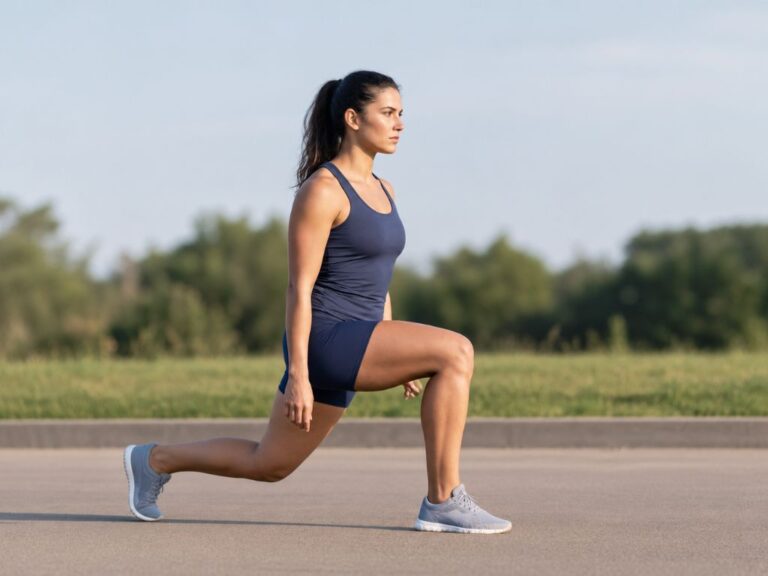
- Walking lunge, adds a balance and coordination demand squats do not
- Bulgarian split squat, one leg at a time, dramatically harder than it looks
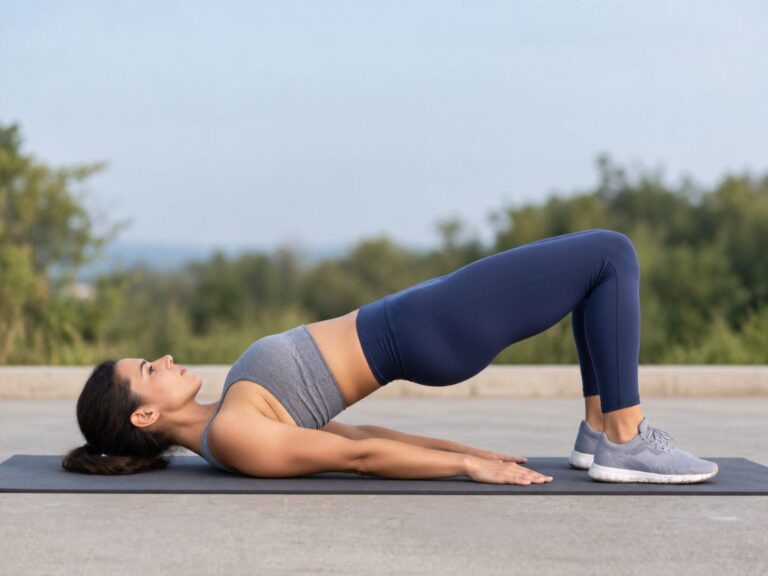
- Glute bridge, targets the posterior chain most leg routines ignore
- Calf raise, small movement, often the most neglected muscle group in bodyweight training
Building real strength without adding weight
The reason why the Bulgarian split squat feels so much harder than a regular squat is not a secret. Shifting to one leg approximately doubles the load borne by that leg, which is exactly how bodyweight training can become difficult without touching the dumbbells. NASM’s exercise library cites such unilateral movements as essential for building strength, correcting side-to-side imbalances, and improving balance in a way bilateral squat simply cannot.
If you have also hit a plateau with weighted training, the underlying issue is usually the same as covered in my article on why dumbbell workouts stop showing progress, the body adapts to the demand so much that you stop increasing, whether the load is there or not.
A full calisthenics leg workout to try
Three rounds, minimal rest between exercises, and a real rest between rounds.
- Bodyweight squats, 15 reps
- Walking lunges, 10 per leg
- Bulgarian split squats, 8 per leg
- Glute bridges, 15 reps
- Calf raises, 20 reps
Rest 60 to 90 seconds between rounds. By round three, the split squats will humble you far more than the squats ever did.
If five moves is not enough volume for you, the Murph workout closes with 300 air squats on top of pull-ups and push-ups, a genuinely brutal test of how far bodyweight leg endurance can actually go.
Where this leaves you
Squats alone were never the ceiling, they were just the starting point. Add split squats, single-leg work, and a little more variety, and fifty reps on your legs will stop feeling boring very quickly.
Five moves, no equipment, and a routine that actually works as long as you stick to it.
FAQs
Can calisthenics actually build leg muscle without weights?
Yes, especially with single-leg movements like the Bulgarian split squat, which load one leg with roughly double the demand of a standard squat.
How often should you do a calisthenics leg workout?
Two to three times a week works well for most people, with at least one rest day between sessions to let the muscles recover.
What is the hardest bodyweight leg exercise?
The pistol squat, a full single-leg squat to depth, is widely considered the benchmark. Most people need months of single-leg work like the routine above before attempting it.
Is this enough for real leg growth?
For most people starting out, yes. As you get stronger, adding a weighted vest or slowing your tempo keeps the same movements challenging without needing a gym.
