

 By
You find more hair than usual on your pillow and your mind goes straight to dinner. Was it soda? Late night snack? Crash diet from last spring?
Here is the useful truth. There is actual research behind some eating habits, and many popular culprits have almost no research behind them.
This guide separates the foods to avoid for hair loss from the myths, so you can change what matters.
Can food really cause hair loss?
Sometimes, but rarely in a dramatic way.
A balanced plate, like the one in our anti-inflammatory diet meal plan, covers most of the basics your follicles need.
The Mayo Clinic says people typically lose 50 to 100 hairs a day, and heredity is the most common cause of baldness. Diet matters primarily through nutrient deficiencies. A review in Dermatology Practical & Conceptual suggests that sudden weight loss or low protein intake can trigger a temporary shedding called telogen effluvium.
The same review links high doses of vitamin A, vitamin E, and selenium with hair loss. So the real question isn’t which food is the villain. These are the habits that starve your body or burden it.

Foods to avoid for hair loss at a glance
| Food or habit | Evidence | What the research shows |
|---|---|---|
| Crash diets and very low protein | Strongest | A well-documented trigger for temporary shedding |
| High-dose vitamin A and selenium | Strong | Over-supplementing is linked to hair loss |
| Raw egg whites in large amounts | Strong but rare | Can cause biotin deficiency |
| Heavy alcohol use | Indirect | Linked to low zinc, folate, and niacin |
| Sugary drinks | Limited | One survey links high intake to male pattern hair loss |
| Refined carbs and sweets | Limited | Tied to blood sugar, not directly to hair |
| Fried and ultra-processed food | Limited | A concern mainly when it replaces protein, iron, and zinc |
The 7 habits worth limiting
1. Crash diets and very low protein eating
This has the strongest evidence, and it is not a food at all. Shedding often appears two to three months after the trigger, so people blame the wrong thing.
Mayo Clinic also lists significant weight loss and poor nutrition as risk factors.The good news is that this shedding is usually t emporary. Slower weight loss with enough protein is kinder to your hair.
2. High-dose vitamin A and selenium supplements
Hair vitamins are the sneaky one, because they are sold as the fix.
The dermatology review found that vitamin A deficiency has no known link to hair loss, while excess supplementation does. A letter in the Journal of the American Academy of Dermatology raises the same concern about selenium.
Check your labels. The adult upper limit for preformed vitamin A is 3,000 mcg (about 10,000 IU) a day.
High-dose biotin can also interfere with some blood tests, so tell your clinician before any lab work. If you are pregnant or planning to be, ask your clinician before taking vitamin A.
3. Raw egg whites in large amounts
This is rare, but it is documented. Raw egg whites contain avidin, a protein that binds biotin.
Cooked eggs are fine and a great protein source.
4. Heavy alcohol use
The concern is heavy, long-term drinking, not an occasional glass.
The dermatology review lists alcoholism as a risk factor for low folate, zinc, and niacin, and these nutrients support hair health.
5. Sugary drinks
A 2023 survey of nearly 2,000 young men in China linked higher sugary drink intake to male pattern hair loss.
The hair loss was not clinically diagnosed, so the study cannot prove cause. Still, cutting back is a low-risk change that helps your overall health.

6. Refined carbs and sweets
White bread, pastries, and candy spike blood sugar. Some small studies connect early-onset pattern hair loss in men with insulin resistance. That is an association, not proof that bread causes thinning.
Research does not single out one type of sugar. Total added sugar is what counts, and pairing carbs with protein helps. Our insulin resistance meal plan shows how.
7. Fried and ultra-processed food
Fries, chips, and packaged snack cakes are not toxic to your hair.
The issue is displacement. When they replace meals with protein, iron, and zinc, your follicles run short on raw materials. Additives and artificial sweeteners get blamed too, but human evidence is lacking. I would not build your diet around avoiding them.
3 myths you can stop worrying about
Dairy
Claims that dairy raises DHT and shrinks follicles lack solid human evidence. Flavored milk and sweetened yogurt do add sugar, so watch that instead.
Spicy food
No good evidence shows chili or hot sauce causes hair loss. They may make you sweat, but sweating is not shedding.
Moderate coffee
A normal coffee habit has no solid link to hair loss. Sweetened coffee drinks fall under added sugar.
What to eat instead
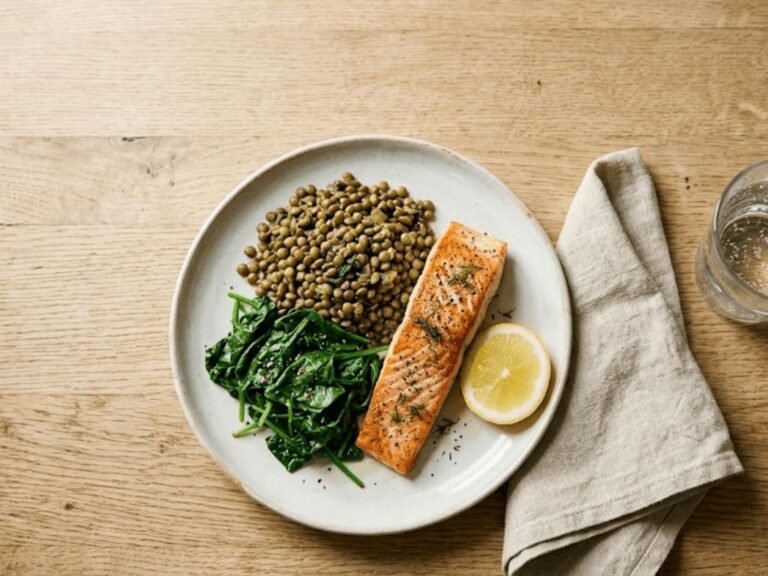
You do not need a perfect diet. You need enough protein, iron, and zinc, and a normal balanced plate. Try eggs, fish, beans, lentils, tofu, nuts, and leafy greens.
Plant-based? Pay extra attention to iron and zinc. The review notes that vegetarians and vegans are at higher risk of iron deficiency, and plant foods absorb less zinc. Our article on vegan meal prep ideas, can help.
When food is not the problem
Genetics, thyroid problems, pregnancy, stress and certain medications can all cause hair loss, according to the Mayo Clinic. See a doctor if your hair is falling out suddenly, irregularly, or more heavily than usual. A doctor can decide whether testing for iron or zinc is worthwhile.
Diet change also requires patience. Give them three to six months before assessing the results.
The bottom line
Hair loss is stressful, and it is tempting to take that stress out on your plate. Try not to. Cutting every food on the internet’s blacklist will not save your hair, but it can wear you down. Pick one small change you can actually keep. Maybe it is a real breakfast with protein, or a swap for your daily soda. Then give it a few months, because your hair has never worked on your schedule.
If something feels off, trust that feeling. A quick check-up can tell you more than any food list, and it beats guessing alone at 11 pm. Treat this guide as a starting point, not a verdict, and bring your questions to a professional who can look at the full picture.
