

 By
By I spent many nights watching videos that promised to erase cellulite in a week. Wraps. brush. Creams whose names I couldn’t pronounce. Nothing changed from what I saw in the mirror.
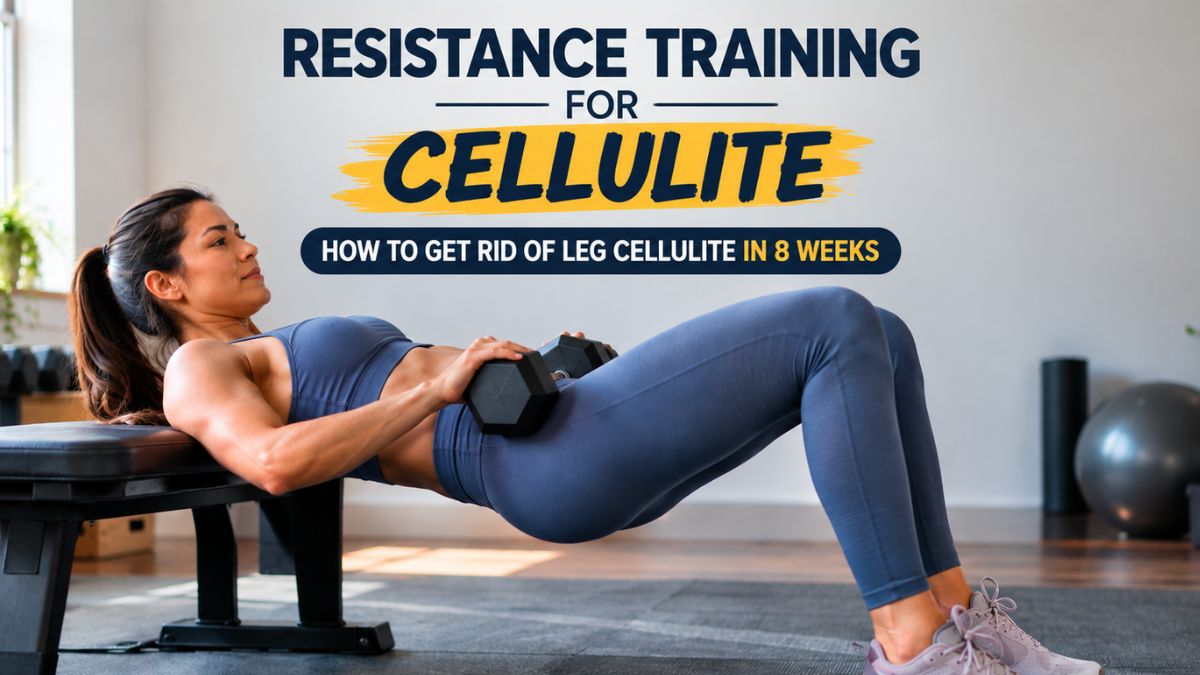
What really moved the needle was much less exciting: lifting weights consistently, for about two months. no miracles. Not overnight. Just resistance training for cellulite, done on a schedule I could actually follow.
If you’ve searched for anything about how to get rid of leg cellulite, you’ve probably already tried some of those shortcuts. This is the version that skips the shortcuts and tells you what’s really happening under your skin, and what a realistic timeline looks like.
It’s the same kind of consistency that finally fixed my stalled dumbbell routine after six months of going nowhere. Once I stopped chasing quick fixes and stuck to a plan, resistance training for cellulite worked the exact same way.
Why cellulite shows up in the first place
Cellulite is not a sign that there is something wrong with you. This is an extremely common, harmless skin condition where fat cells move upward against the skin while tough connective cords stretch downward, creating a dimpled texture that people describe as the skin of cheese or orange peel.
According to the Mayo Clinic, at least 8 out of 10 women have some amount of cellulite, and it appears regardless of body weight or fitness level. If you’ve got this, you’re in the overwhelming majority, not the exception.
This matters because a lot of the marketing around cellulite is designed to make you feel like it’s a personal failing. It’s not like that. It’s structural, and it’s normal.
The part nobody warns you about
Here’s the part that most articles leave out. In the first week or two of a new resistance training routine, the area you’ve been working may look a little puffy, not smooth.
Is this plan backfiring? The Cleveland Clinic explains that new or more intense exercise causes small tears in the muscle fibers, causing a short-term inflammatory response and a buildup of fluid around the muscles as your body repairs itself. That swelling can temporarily make dimples more noticeable, and it usually resolves within a few days.
Knowing this ahead of time is the difference between quitting in the first week because it’s not working, and continuing through the eighth week because you understand exactly what your body is doing.
What resistance training actually changes under the surface
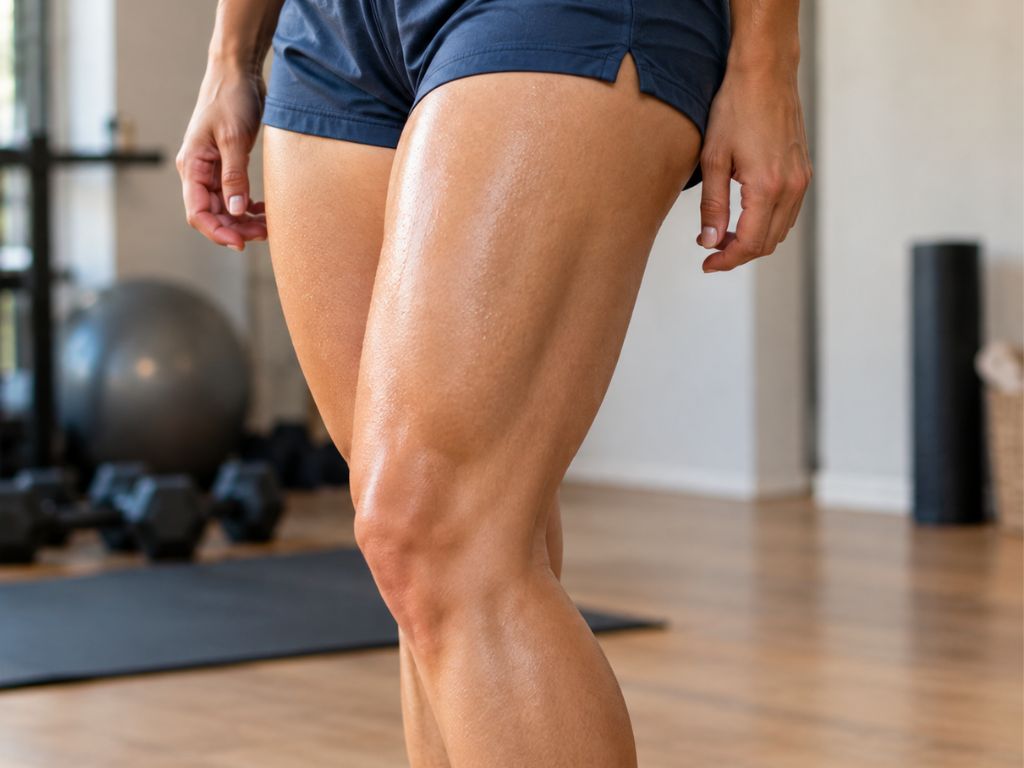
Once you get past that initial adjustment window, resistance training starts to do two things that really matter for how cellulite looks.
First, it creates muscle volume beneath the fat layer, which lifts and smooths the skin from underneath rather than leaving it loose on the soft tissues. Second, consistent training changes the overall fat distribution over time, which reduces pressure against those connective cords.
This is consistent with what Harvard Health has reported more broadly about strength training: It maintains and can even increase muscle mass, which most people lose with age, and it improves the overall ratio of muscle to fat in the body.
It’s worth being honest about limits here too. Resistance training does not rebuild connective tissue. What changes is how much muscle sits beneath it and how much fat is pressing on it, which is enough for most people to noticeably soften the dimple, even if it’s not a completely erase button.
An 8 week routine that actually fits real life
No need for a gym membership or an hour a day to see this work. A handful of compound moves that hit the glutes, hamstrings and quads is enough to start noticing a difference by the end of week 8 with two to three sessions a week.
Squats, glute bridges, hip thrusts and reverse lunges do most of the heavy lifting here, literally. If you’re newer to training, begin with bodyweight and then add dumbbells or a resistance band when the movement starts to feel easy to control instead of something you’re fighting through.
If you’re working with dumbbells already and progress has stalled, the fix I found earlier applies here too: less time per session, not more, once the movement pattern is dialed in.
And if you’d prefer starting off with no equipment at all, this bodyweight back workout demonstrates how much strength you can build with nothing but your own body weight. That’s a good entry point before you add resistance.
What this method won't do
It will not make cellulite disappear entirely. Genetics and structure of the skin play a real role and no amount of squats rewrites those factors.
The Mayo Clinic is very specific in its own recommendations to patients that there is no guaranteed way of getting rid of cellulite altogether, although losing weight and exercising can make it far less visible by keeping the surrounding muscle toned.
And it’s not going to fix things in a minute, it’s not going to be straight. Some weeks you will feel like nothing is changing then see a real difference in the mirror in a couple days. You’ll see that stall-then-shift pattern in a lot of training goals, not just this one.
In fact, I had the same thing with Pilates. After ten sessions, I looked in the mirror and saw nothing new. It turned out that the fix wasn’t about trying harder. If you recognize the pain of lost progress, here’s what was really going on.
FAQs
Does cellulite come back if I stop training?
Usually, yes, to some degree. Muscle tone fades without ongoing stimulus, and fat distribution shifts back over time, so consistency matters more than any single hard push.
Can men get cellulite too?
Yes. It’s far more common in women because of differences in skin structure and fat distribution, but Mayo Clinic notes it can appear in men as well.
Why does cellulite look worse right after a workout instead of better?
That’s the temporary swelling and fluid shift covered earlier. It settles within a few days as your body finishes repairing the muscle tissue.
If there is one thing you take from this, let it be the time line. Give it 8 honest weeks before you decide if it’s working. The version of you that began this routine, and the version of you continuing on at week eight, will see a very different person in the mirror, and that’s the whole point.
