

 By
By Side lunges: a complete guide to muscles worked, benefits, and beginner form
You are sitting at your desk for the fourth hour in a row, and when you finally stand up, your hips feel like they forgot how to bend sideways. That stiffness is not random. Most of us move forward and backward all day, walking to the kitchen, sitting down, standing up, but almost never sideways. The side lunges exercise fixes exactly that gap, and it does it in a way most workout routines quietly skip.
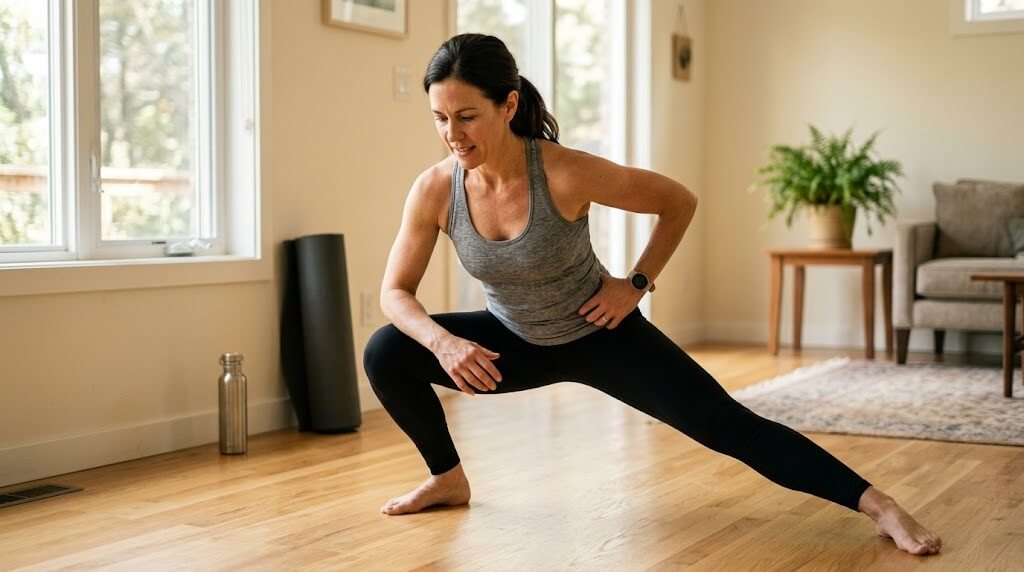
This one movement asks your hips to control weight in a direction they rarely practice. That is precisely why it feels awkward the first few times you try it, and also why it pays off faster than most people expect.
What the side lunges exercise actually is
Picture a regular lunge, except instead of stepping forward, you step out to the side. One leg bends and takes your body weight while the other stays straight and anchored. You push yourself back up to standing, then repeat on the other leg. That side to side motion is called the frontal plane, and it is the one plane of movement most workouts, and most daily life, completely ignore.
Think of it as teaching your hips a skill they already need but rarely get to practice: stepping sideways to catch your balance, reaching for something off to the side, getting in and out of a car.
What muscles do they work
Here is where the side lunges exercise earns its place in a smart routine. Your quads and glutes do the heavy lifting, same as any lunge or squat. But the real difference shows up in your inner thighs.
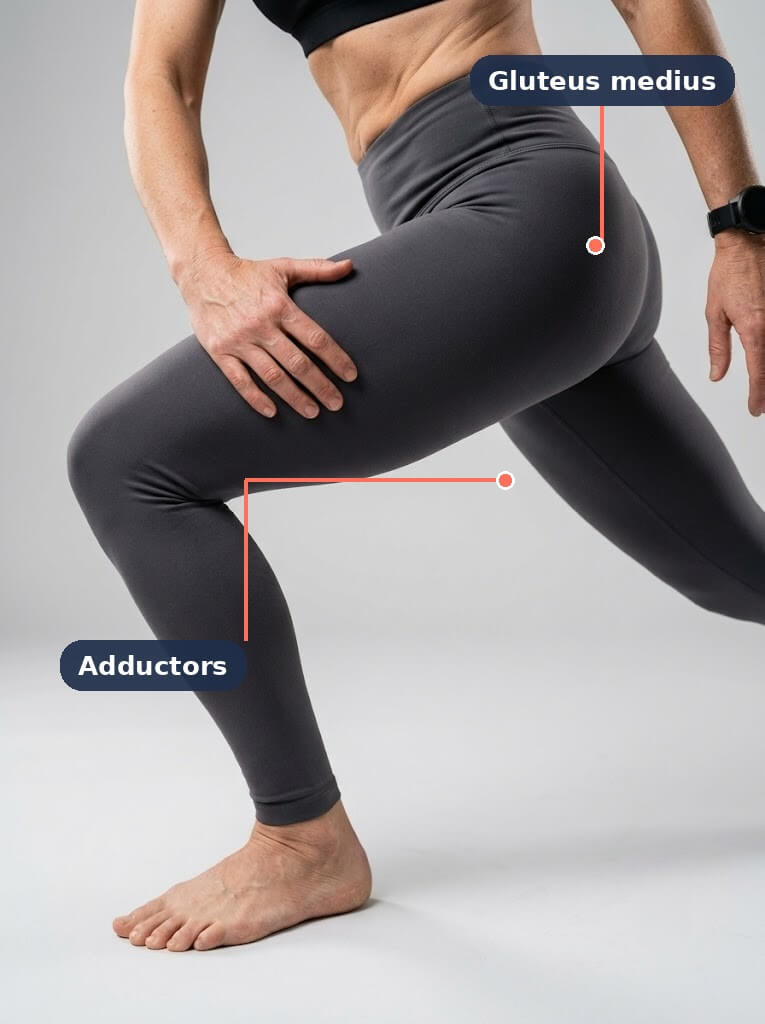
The muscles running along your inner thigh, called the adductors, barely get touched by squats, deadlifts, or forward lunges. Step sideways and load your body weight into that position, and those muscles have no choice but to switch on. You will feel it the next morning in a spot that squats never quite reach.
There is a second muscle worth knowing about, tucked on the outer side of your hip, called the gluteus medius. It keeps your hips level every time you walk, climb stairs, or stand on one leg. Weak hips on the side usually trace back to this muscle never being challenged.
If you want to build on this with more targeted lower body work, our strength training for a toned body guide is a natural next stop.
Are side lunges good for beginners
Yes, with one honest caveat. If your knees are healthy and you have no current pain, the side lunges exercise is a genuinely beginner friendly move. You do not need equipment, you do not need much space, and the range of motion is easy to control.
The caveat is for anyone already dealing with knee sensitivity or a past injury. Because this movement asks your knee to track sideways rather than straight forward, it demands more control from your hip and ankle than a standard squat does. If that control is not there yet, the knee tends to compensate, and that is where discomfort creeps in. The fix is not to avoid the movement, it is to start shallow. A quarter depth side lunge, holding onto a chair or countertop for balance, builds the same pattern without the same demand. Depth is something you earn over a few weeks, not something you start with.
New to strength training in general? Our 30 minute bodyweight workout for beginners is a good place to build a base before layering this in.
Side lunges compared to regular lunges
|
|
Side lunges |
Regular forward lunges |
|
Main muscle emphasis |
Glutes, quads, inner thigh adductors |
Glutes, quads, hamstrings |
|
Knee demand |
Moderate to high, requires lateral control |
Lower, more familiar movement pattern |
|
Balance challenge |
Higher, works the frontal plane |
Lower, works the plane you already use daily |
Neither move beats the other. They train different things, which is exactly why pairing them works better than picking one and ignoring the other.
Getting the form right
Most people make the same mistake with the side lunges exercise: they lean their chest too far forward, which drags the knee out past the toes and puts unnecessary strain on the joint. The fix is simple. Sit your hips back like you are lowering into a chair positioned slightly to your side, not folding forward at the waist.
A few cues worth keeping in your back pocket:
- Push your hips back before your knee bends forward
- Keep your stepping foot flat on the ground the entire time
- Let your straight leg stay long and active, not locked or floppy
- Come back up through your heel, not your toes
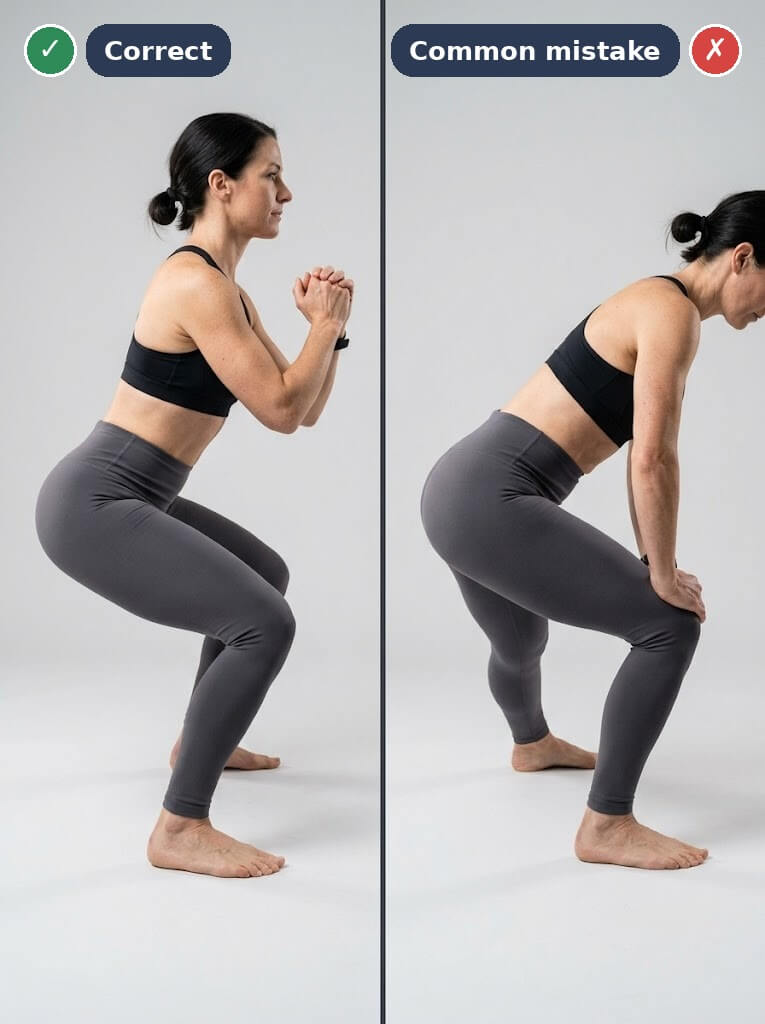
One cue, hips back before knee forward, solves almost every form issue at once. If you only remember one thing from this article, remember that.
A quick safety note
If you have existing knee pain, are recovering from a lower body injury or surgery, or are pregnant, talk to your doctor or a physical therapist before adding side lunges into your routine. This article is meant to inform, not replace guidance tailored to your body.
The American Council on Exercise breaks down proper knee and shin alignment for this exact movement in detail. And the National Institute on Aging points to balance training, which lateral moves like this one build, as one of three exercise types adults need each week.
Frequently asked questions
How many side lunges should a beginner do
Start with two sets of eight to ten reps per leg, two to three times a week. Add a set or a few reps every couple of weeks once the movement feels controlled rather than shaky.
Do side lunges tone the inner thighs
They strengthen the inner thigh adductors, which improves how firm and functional that area feels. No exercise spot reduces fat from one area, so pair this with your overall training and nutrition for visible change.
Can side lunges replace squats
No, and they are not meant to. Squats train mostly forward and backward strength, while side lunges train the sideways movement squats skip. Doing both gives you more complete lower body coverage than either alone.
What is the difference between a side lunge and a lateral lunge
Nothing meaningful. Side lunge and lateral lunge describe the same movement, just different naming conventions used across trainers and gyms.
Are side lunges safe if I have bad knees
They can be, at a shallow depth and with support from a chair or wall. If you feel sharp or pinching pain rather than muscle fatigue, stop and check in with a physical therapist before continuing.
Where this leaves you
The side lunges exercise will not transform your body overnight, and nobody honest will tell you it does. What it will do, consistently, is close a gap most routines never address. A few sets, two or three times a week, and you will likely notice steadier balance and less stiffness in movements you had stopped thinking about.
If stiffness and stability are already on your mind, our guide to muscle loss symptoms after 40 is worth a read next.
