

 By
By Core Workouts for Beginners: The Ultimate Guide to Building a Strong Foundation
If you have ever felt lost at the gym, unsure of where to start, or intimidated by those advanced athletes grinding through intense ab circuits — you are not alone. The truth is, every fitness journey has to start somewhere, and the smartest place to begin is with core workouts for beginners. Building a strong core is not just about getting six-pack abs. It is about creating a solid, functional foundation that supports everything your body does — from sitting at a desk to lifting groceries, climbing stairs, or eventually tackling more advanced training. Core strength is the backbone of all physical performance, and if you are just getting started, you are in exactly the right place. This comprehensive guide will walk you through everything you need to know about core workouts for beginners — from understanding why your core matters to step-by-step exercises, weekly schedules, safety tips, and motivational advice to keep you going.

What Exactly Is Your Core?
Before diving into core workouts for beginners, it helps to understand what your core actually is. Most people think the core is just the abs — those six muscles you see in fitness magazine covers. But your core is a complex group of muscles wrapping around your entire midsection. It includes your rectus abdominis (the front ab muscles), the transverse abdominis (the deep stabilizing layer), the obliques on your sides, your lower back muscles, pelvic floor muscles, and even your hip flexors and glutes. When all of these muscles work together, they create the kind of stability and power that improves your performance in every physical activity. Effective core workouts for beginners target all of these muscles — not just the ones you can see in the mirror.
The Life-Changing Benefits of Core Training
One of the biggest reasons core workouts for beginners deserve a permanent spot in your weekly routine is the extraordinary range of benefits they deliver. These are not just cosmetic benefits. Core training transforms how your body moves, feels, and functions every single day.
Better Posture: A weak core leads to slouching, rounded shoulders, and a collapsed lower back. Consistent core workouts for beginners strengthen the muscles responsible for holding your spine upright, which means you sit taller, stand prouder, and feel more confident throughout the day.
Reduced Back Pain: Lower back pain is one of the most common complaints among adults in the US. Research consistently shows that strengthening the core significantly reduces both the frequency and intensity of back pain. When your deep core muscles are strong, they act like a natural brace for your lumbar spine.
Improved Athletic Performance: Whether you enjoy running, cycling, swimming, or playing recreational sports, a strong core makes everything easier. Power is generated from the center of your body and transferred outward, so strong core workouts for beginners build the foundation for speed, agility, and endurance.
Better Balance and Stability: Core workouts for beginners improve proprioception — your body’s ability to sense its position in space — which translates to better balance and reduced risk of falls and injuries.
Enhanced Breathing: Your diaphragm and pelvic floor are both considered core muscles. Strengthening them through beginner core exercises actually improves your breathing mechanics, which benefits everything from daily life to heavy exercise sessions.

Why Beginners Should Prioritize Core Training First
There is a tendency among new gym-goers to jump straight into bench pressing, squatting, or running long distances before they have built any foundational strength. This is a recipe for injury, frustration, and burnout. Core workouts for beginners should come first because they prepare your body for everything else. Think of your core as the engine room of your body. Without a powerful, stable engine, even the best chassis will fall apart under pressure.
When you make core workouts for beginners the centerpiece of your early training, you are essentially laying the groundwork for safer squats, more effective push-ups, stronger deadlifts, and more efficient cardio. Every compound movement in the gym is made safer and more powerful when your core is trained and ready. At wayfithub, we always tell new members: build your core first, and everything else will follow more naturally and safely.
Common Mistakes Beginners Make with Core Training
Even with the best intentions, beginners often fall into the same traps when they start core workouts for beginners. Being aware of these pitfalls can save you weeks of frustration and help you get results faster.
Mistake #1 — Doing Too Many Crunches: The classic crunch is overrated and overused. While crunches do work part of your rectus abdominis, they ignore the deep core muscles and the posterior chain. Effective core workouts for beginners involve far more than just crunching your way to a flat stomach.
Mistake #2 — Holding Your Breath: Many beginners unconsciously hold their breath during core exercises, especially planks and leg raises. This spikes intra-abdominal pressure and can cause dizziness or strain. Always breathe steadily during your core workouts for beginners.
Mistake #3 — Skipping the Warm-Up: Jumping cold into core workouts for beginners puts your lumbar spine and hip flexors at risk. A five-minute dynamic warm-up is non-negotiable.
Mistake #4 — Training Core Every Single Day: Your core muscles are muscles — they need recovery time just like your biceps or quads do. The best approach for core workouts for beginners is three to four targeted sessions per week with rest days in between.
Mistake #5 — Prioritizing Speed Over Form: Rushing through reps with poor form is one of the fastest ways to injure yourself and stall your progress. Slow, controlled reps with proper alignment will always outperform sloppy high-speed sets in core workouts for beginners.

The Best Core Workouts for Beginners: 10 Essential Exercises
Here are ten of the most effective and beginner-friendly exercises that should form the backbone of your core workouts for beginners program. Each one is safe, equipment-free, and proven to deliver results when done consistently.
1. The Dead Bug
The dead bug is one of the safest and most effective core workouts for beginners. Lie on your back with arms pointed toward the ceiling and knees bent at 90 degrees. Slowly lower your right arm overhead while simultaneously extending your left leg toward the floor. Hold briefly, return to the starting position, and switch sides. This movement trains your deep transverse abdominis and teaches your core to stabilize against opposing limb movements — a skill essential for everyday life. Perform 8 to 10 reps per side.
2. The Forearm Plank
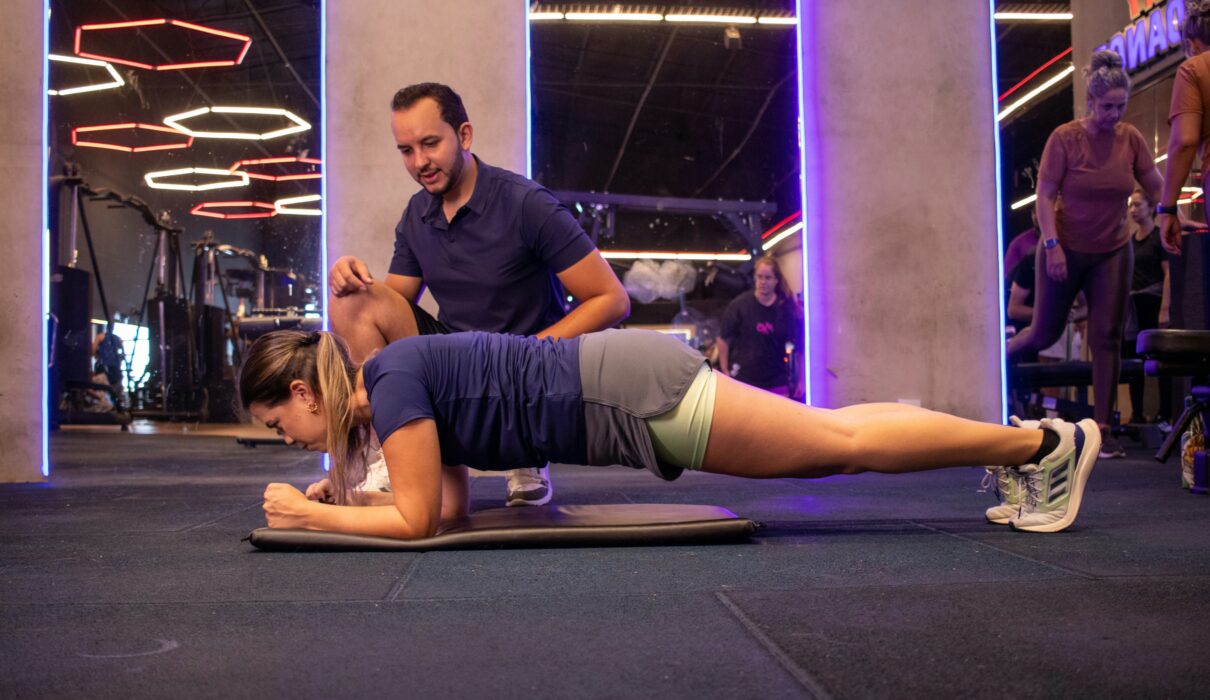
No list of core workouts for beginners would be complete without the plank. Place your forearms on the floor, elbows directly under your shoulders. Extend your legs behind you and hold your body in a straight line from head to heels. Engage your glutes, brace your abs, and breathe normally. Start with holds of 20 to 30 seconds and build up to 60 seconds or more over time. The plank works your entire core — front, sides, and back — making it one of the most efficient exercises in any core workouts for beginners plan.
3. Bird Dog
Start on all fours with your wrists under your shoulders and knees under your hips. Simultaneously extend your right arm forward and your left leg back, keeping your hips level and your spine neutral. Hold for two to three seconds, then return and switch sides. The bird dog is beloved by physical therapists and is a staple in core workouts for beginners because it builds anti-rotation stability and improves coordination between the upper and lower body.
4. Glute Bridge
Lie on your back with knees bent and feet flat on the floor, hip-width apart. Press through your heels and lift your hips toward the ceiling until your body forms a straight line from knees to shoulders. Squeeze your glutes at the top, hold for two seconds, and lower slowly. The glute bridge is a foundational movement in core workouts for beginners because it activates the posterior chain — your glutes, hamstrings, and lower back — which are crucial components of total core strength. Aim for 12 to 15 reps per set.
5. Modified Side Plank
Lie on your side and prop yourself up on your forearm with knees bent and stacked. Lift your hips off the ground and hold your body in a diagonal line. The side plank targets your obliques and lateral stabilizers — muscles that are often neglected in beginner programs but are essential for a balanced, functional core. Hold for 20 to 30 seconds per side, and progress to a full side plank with straight legs as your core workouts for beginners advance.
6. Knee Tucks
Lie on your back with legs extended. Bring both knees toward your chest while lifting your head and shoulders slightly off the floor. Hold for a moment, then slowly return to the start. Knee tucks are an accessible alternative to full leg raises and are perfectly suited for core workouts for beginners who are still building hip flexor and lower abdominal strength. Do 10 to 12 reps per set.
7. Mountain Climbers (Slow Tempo)
Begin in a high plank position. Drive one knee toward your chest, then return and switch legs. When done slowly and with full control, mountain climbers are one of the most dynamic core workouts for beginners — challenging your stability, hip flexors, and shoulders simultaneously. Start at a slow, deliberate pace and gradually increase tempo as your fitness improves. Aim for 8 reps per leg.
8. Seated Ab Compressions
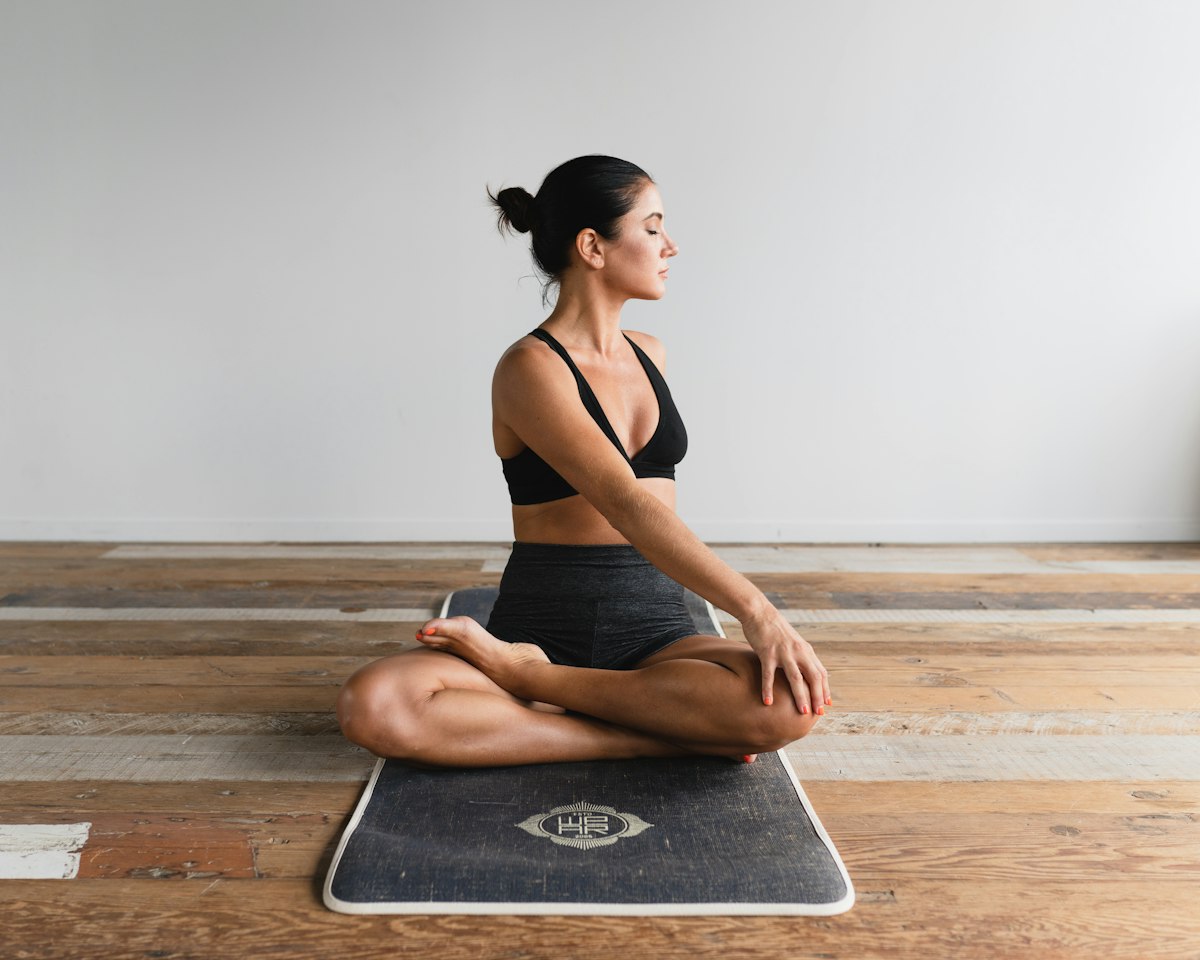
Sit on a mat with knees bent and feet flat. Lean back slightly and place your hands on your thighs. Draw your belly button toward your spine and hold the compression for five to ten seconds while breathing slowly. Release and repeat. This gentle but effective move activates the transverse abdominis — the deepest core layer — making it ideal for early-stage core workouts for beginners who need to learn how to connect with their deep core muscles.
9. Superman Hold
Lie face down with arms extended overhead. Simultaneously lift your arms, chest, and legs off the floor and hold for two to three seconds. Lower slowly and repeat. The Superman is an underutilized gem in core workouts for beginners because it specifically targets the erector spinae and lower back — muscles often ignored in standard ab routines. Strong lower back muscles are just as critical to core stability as strong abs. Do 8 to 10 reps per set.
10. Hollow Body Hold
Lie on your back and press your lower back firmly into the floor. Extend your arms overhead and lift your legs to about 45 degrees. Your body should form a shallow bowl shape. Hold for 10 to 20 seconds and build from there. The hollow body hold is widely considered one of the most complete core workouts for beginners because it engages virtually every muscle in your midsection simultaneously. It also serves as a stepping stone toward more advanced gymnastics-style movements.
Your 4-Week Beginner Core Workout Plan
Consistency is what transforms core workouts for beginners from occasional effort into lasting results. Here is a structured four-week plan to get you started. Follow this schedule three days per week — such as Monday, Wednesday, and Friday — and give yourself full rest days in between to allow recovery.
Week 1 — Foundation Phase
Focus on learning proper form and activating your deep core muscles. Each session should last 15 to 20 minutes. Perform: Dead Bug — 2 sets of 8 reps per side. Forearm Plank — 2 sets of 20-second holds. Glute Bridge — 2 sets of 12 reps. Seated Ab Compressions — 2 sets of 8 holds. Bird Dog — 2 sets of 8 reps per side. Rest 60 seconds between sets. These foundational core workouts for beginners will teach your body how to stabilize before adding more challenge.
Week 2 — Build Phase
Increase volume and introduce new movements. Sessions run 20 to 25 minutes. Add: Modified Side Plank — 2 sets of 25-second holds per side. Knee Tucks — 2 sets of 10 reps. Increase Plank holds to 35 seconds. Increase Dead Bug to 10 reps per side. The progression in your core workouts for beginners is intentional — your body adapts faster when you challenge it slightly more each week.
Week 3 — Strength Phase
Advance to 3 sets of each exercise and add: Mountain Climbers — 3 sets of 8 reps per leg. Superman Hold — 3 sets of 10 reps. Increase Plank holds to 45 to 50 seconds. Sessions are now 25 to 30 minutes. By week three, your core workouts for beginners are beginning to feel more like intermediate training — and that is exactly the point.
Week 4 — Peak Phase
Introduce the Hollow Body Hold and push all other exercises to 3 sets with reduced rest (45 seconds). Plank holds should reach 60 seconds. By the end of week four, you will have built a remarkable level of core stability, endurance, and awareness through consistent core workouts for beginners. You will likely notice better posture, reduced back discomfort, and improved performance in other exercises.
Safety Tips to Protect Yourself During Core Training
Your safety is the top priority during any fitness routine, especially when you are just getting started. Here are essential safety guidelines to follow during your core workouts for beginners:
Always Warm Up: Spend five minutes doing light movement — walking in place, hip circles, leg swings, and arm rotations — before any core workouts for beginners. A warm body is a safer body.
Protect Your Lower Back: Never allow your lower back to arch excessively during exercises like leg raises or planks. If you feel strain in your lumbar region during core workouts for beginners, reduce the range of motion or switch to an easier variation.
Listen to Your Body: Sharp or shooting pain during core workouts for beginners is a signal to stop immediately. Discomfort from muscle fatigue is normal; pain from joints or the spine is not.
Use a Proper Mat: Train on a firm, supportive surface. A yoga or exercise mat protects your spine, tailbone, and knees during floor-based core workouts for beginners.
Consult a Doctor if Needed: If you have a history of back injury, hernia, or pelvic floor issues, consult your physician before starting core workouts for beginners.
Recovery Tips After Core Workouts for Beginners
Recovery is where the real magic happens. Your muscles repair and grow stronger during rest — not during the workout itself. Here is how to maximize your recovery between core workouts for beginners:
Cool Down and Stretch: After every session of core workouts for beginners, spend five to ten minutes doing gentle stretches. Focus on your hip flexors, lower back, and hamstrings — areas that tend to tighten up after core training. The child’s pose, cat-cow, and a figure-four stretch are all excellent choices.
Hydrate Well: Drink at least eight cups of water daily and increase your intake on training days. Proper hydration supports muscle function, nutrient delivery, and waste removal — all of which accelerate recovery from core workouts for beginners.
Prioritize Sleep: Growth hormone — the hormone most responsible for muscle repair — is released primarily during deep sleep. Getting seven to nine hours per night is one of the most powerful recovery tools available to anyone doing core workouts for beginners.
Foam Roll: Using a foam roller on your thoracic spine, glutes, and hip flexors on rest days can significantly reduce soreness and improve mobility between sessions of core workouts for beginners.
Nutrition Advice to Support Your Core Training
No conversation about core workouts for beginners is complete without addressing nutrition. You simply cannot out-train a poor diet, and your food choices will have a massive impact on both your performance and your results.
Eat Enough Protein: Protein is the raw material your body uses to repair and build muscle after core workouts for beginners. Aim for 0.7 to 1 gram of protein per pound of bodyweight daily. Great sources include chicken, eggs, Greek yogurt, cottage cheese, lentils, tofu, and protein shakes.
Do Not Fear Carbohydrates: Carbs are your body’s preferred energy source. Complex carbohydrates like oats, brown rice, sweet potatoes, quinoa, and whole-grain bread fuel your core workouts for beginners and replenish glycogen stores afterward.
Include Healthy Fats: Avocado, olive oil, nuts, seeds, and fatty fish provide anti-inflammatory omega-3 fatty acids that support joint health and recovery. Including these in your diet while doing core workouts for beginners helps reduce chronic inflammation and soreness.
Eat Before and After Training: Have a light, balanced snack 30 to 60 minutes before your core workouts for beginners — something like a banana with peanut butter or a small bowl of oats. Within 30 to 60 minutes after training, consume a protein-rich meal or shake to kickstart recovery.
Limit Processed Foods: Excess sodium, refined sugars, and trans fats promote inflammation and water retention — both of which work against your fitness progress. Eat clean, whole foods the majority of the time and your core workouts for beginners will pay off much faster.
Staying Motivated: Your Mental Game Plan
Let’s be honest — starting anything new is exciting for the first week or two, but motivation can fade when life gets busy, results feel slow, or you hit a tough day. Here is how to keep your commitment to core workouts for beginners strong for the long haul.
Track Your Progress: Keep a simple workout journal or use a fitness app to log your plank hold times, reps, and how you feel after each session. Seeing how far you have come in your core workouts for beginners journey is incredibly motivating.
Set Small, Achievable Goals: Instead of focusing solely on appearance-based goals, set performance goals — like holding a plank for 60 seconds, completing all sets without stopping, or finishing four weeks of core workouts for beginners without missing a session. These milestones build momentum and confidence.
Find Your Community: Fitness is always more fun and sustainable with support. Whether that means a gym buddy, an online fitness community, or a trusted resource like wayfithub, surrounding yourself with like-minded people keeps you accountable and inspired during your core workouts for beginners.
Celebrate Non-Scale Victories: The benefits of consistent core workouts for beginners show up in your life long before they show up on your body. When you notice less back pain, better posture, more energy, or improved performance in other activities — celebrate those wins. They matter just as much as any physical transformation.
Remember Your Why: Write down the reason you started your core workouts for beginners and put it somewhere you will see it daily. Whether it is to feel stronger, move without pain, keep up with your kids, or simply to invest in your health — reconnecting with your why on hard days makes all the difference.
How to Progress Beyond Beginner Core Workouts
After four to six weeks of consistent core workouts for beginners, you will naturally start craving more challenge. That is your body telling you that it has adapted and it is ready to grow. Some natural next steps include introducing weighted exercises like cable crunches, hanging knee raises, or ab wheel rollouts. You can also increase plank hold duration, add instability with a balance ball, or integrate core work into full-body strength training sessions. The beautiful thing about core workouts for beginners is that they build such a solid base that transitioning to intermediate training feels natural and empowering rather than overwhelming.
Resources like wayfithub offer progressive workout programs specifically designed to take you from your first core workouts for beginners all the way through intermediate and advanced core training. Having a structured roadmap means you never have to wonder what comes next — you simply follow the plan and trust the process. The wayfithub community also offers expert guidance, video tutorials, and accountability tools that make the journey from beginner to advanced feel exciting and achievable.
Frequently Asked Questions About Core Workouts for Beginners
How long before I see results from core workouts for beginners?
Most beginners notice improved strength, posture, and endurance within two to three weeks of consistent core workouts for beginners. Visible changes in muscle definition typically take four to eight weeks, depending on your starting point, consistency, and nutrition habits.
Can I do core workouts for beginners at home without any equipment?
Absolutely. Every exercise in this guide requires zero equipment — just a mat and your own body weight. Core workouts for beginners are uniquely accessible because they require no gym membership, no machines, and no special tools. All you need is enough floor space to lie down.
Are core workouts for beginners suitable for older adults?
Yes — and in fact, core training is especially important as we age. Core workouts for beginners that focus on stability and gentle strength, like bird dogs, glute bridges, and seated compressions, are perfectly safe and highly beneficial for older adults looking to improve balance, reduce fall risk, and manage back pain.
The Bottom Line: Your Core Journey Starts Today
There has never been a better time to start core workouts for beginners than right now. You do not need to be in perfect shape, have a gym membership, or possess any prior experience. All you need is a mat, ten to thirty minutes, and a genuine commitment to showing up for yourself. Every plank you hold, every bird dog you complete, and every glute bridge you push through is an investment in a healthier, stronger, more capable version of you.
Core workouts for beginners are not a quick fix. They are the beginning of a lifelong relationship with your body — one built on respect, consistency, and patience. The people who succeed in fitness are not the ones who worked the hardest for two weeks. They are the ones who showed up week after week, followed a smart program, and never gave up on themselves, even when progress felt slow.
You are capable of incredible things. Your core is ready to be trained. All that is left to do is start.
Ready to Level Up Your Core Training?
If you found this guide helpful and you are serious about making the most of your core workouts for beginners, we invite you to explore everything wayfithub has to offer. At wayfithub, you will find expertly designed beginner programs, video-guided workouts, personalized fitness plans, and a supportive community of people who are on the same journey as you. Whether you are just starting your first week of core workouts for beginners or you are ready to transition into something more advanced, wayfithub has the tools, resources, and expert coaching to help you reach your goals faster and smarter.
Your stronger, healthier core is waiting. Start your core workouts for beginners today — and let wayfithub be your guide every step of the way.
