

 By
By Isometric and isotonic exercises in calisthenics (the part your routine is skipping)
Nobody ever sat me down to explain how calisthenics can include both isometric and isotonic exercises, so I spent almost two years doing push-ups and squats without realizing I was only training half of what calisthenics actually offers. My arms became stronger. My squats became deeper. Then around the eighth month, my progress stopped. No injury, no irritation, just a flat line that I couldn’t explain.
It took me an embarrassingly long time to realize that this solution was not a new exercise. It was a whole category of movement that I was missing the whole time.
Learn more about the science of static muscle contractions From the Cleveland Clinic, this is one of the clearest analyzes I’ve found of why stillness still counts as real training.
That’s really what it means to explain how calisthenics can include both isometric and isotonic exercises. One type builds strength through motion, the other builds the stability to control it, and neither one does the full job alone.
What isometric and isotonic actually mean
Picture carrying a heavy grocery bag. If you’re holding it still on your side while waiting for a crosswalk, your arm muscles are working hard, but nothing is moving. That is isometric.
Now picture carrying that same bag up a flight of stairs. Your arm bends and straightens with every step. That is isotonic.
Same muscles, same bag, two completely different demands on your body. Calisthenics can and should use both.
The exercise you're probably already doing (and don't realize is secretly both)
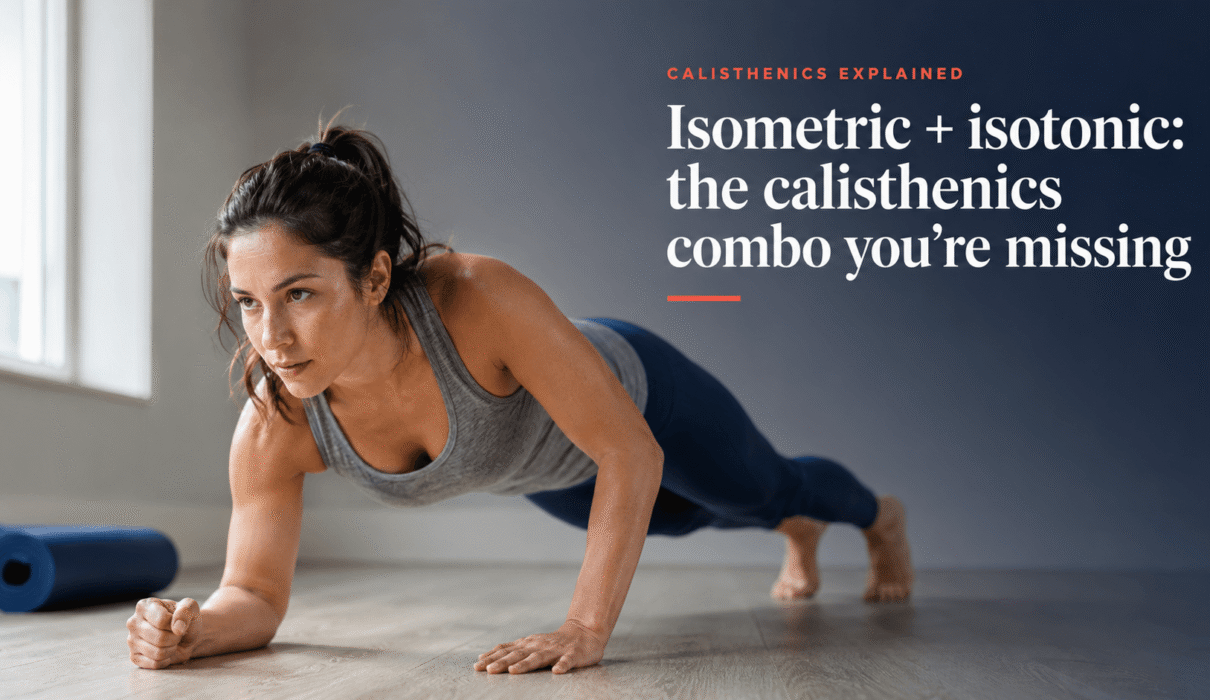
Take a basic push-up. Lowering yourself down and pushing back up is isotonic work, with your chest and triceps changing length all the time.
But pause at the bottom for two or three seconds before you push up, and that pause is pure isometric work. Same exercise, an extra beat, and suddenly you’re training both systems in the same repetition.
You don’t need any new exercises to unlock it. You have to change the way you already know.
Isometric holds, the stillness that's quietly building your strength
Isometric exercises are those in which nothing seems to move, but your muscles are actually working.
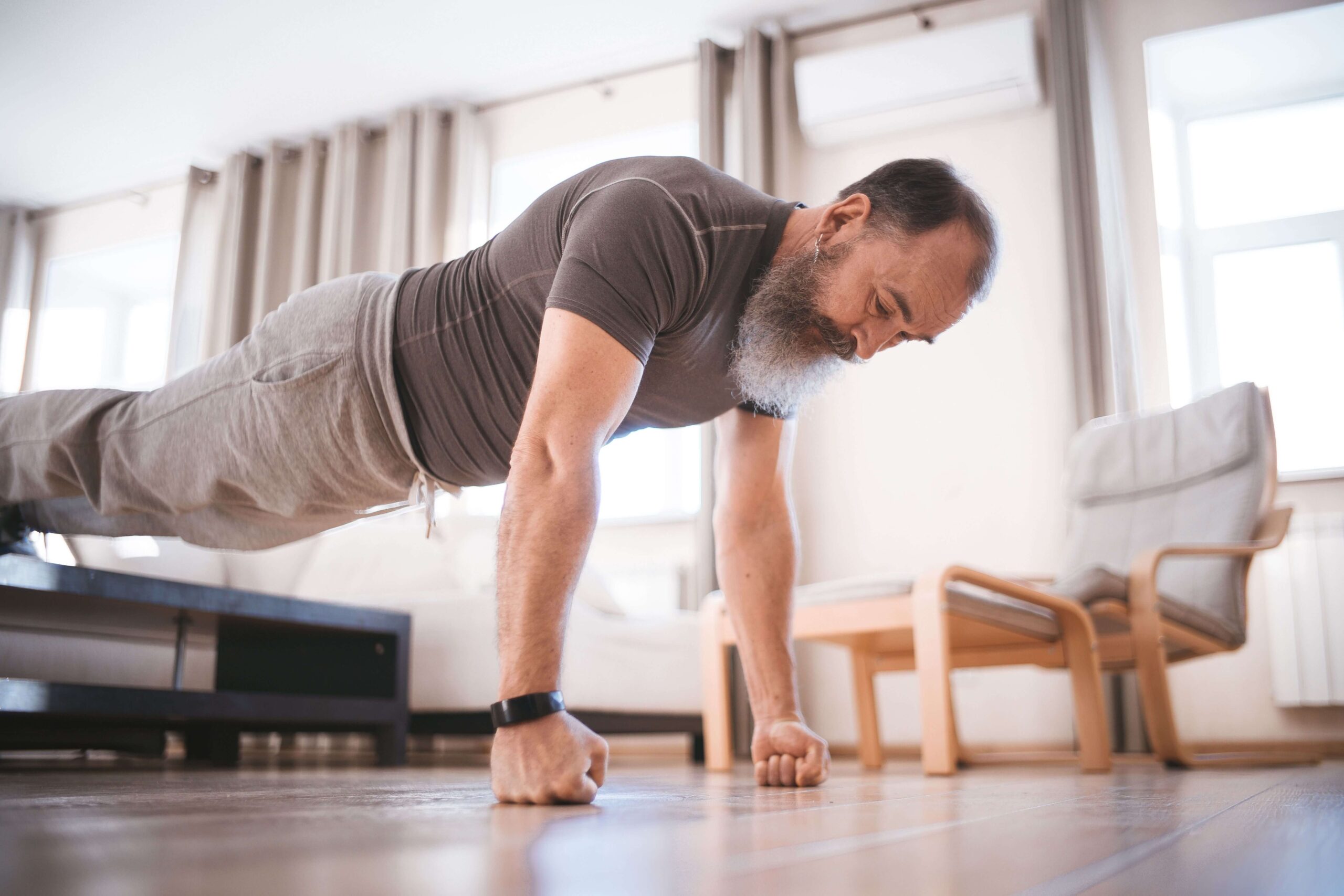
- Plank holds the entire core, shoulders and lower back under constant tension
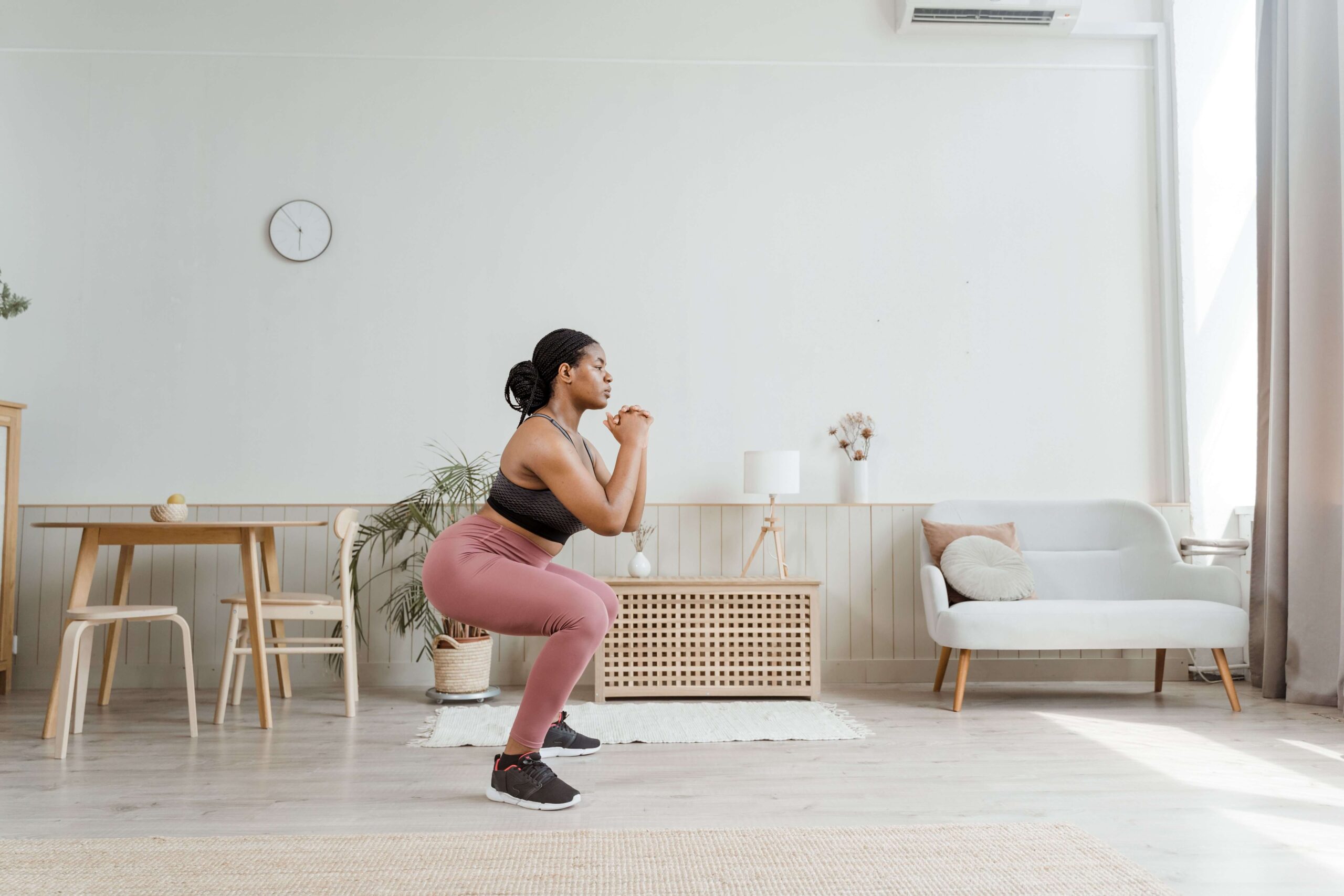
- Wall squats build raw leg endurance without a single rep
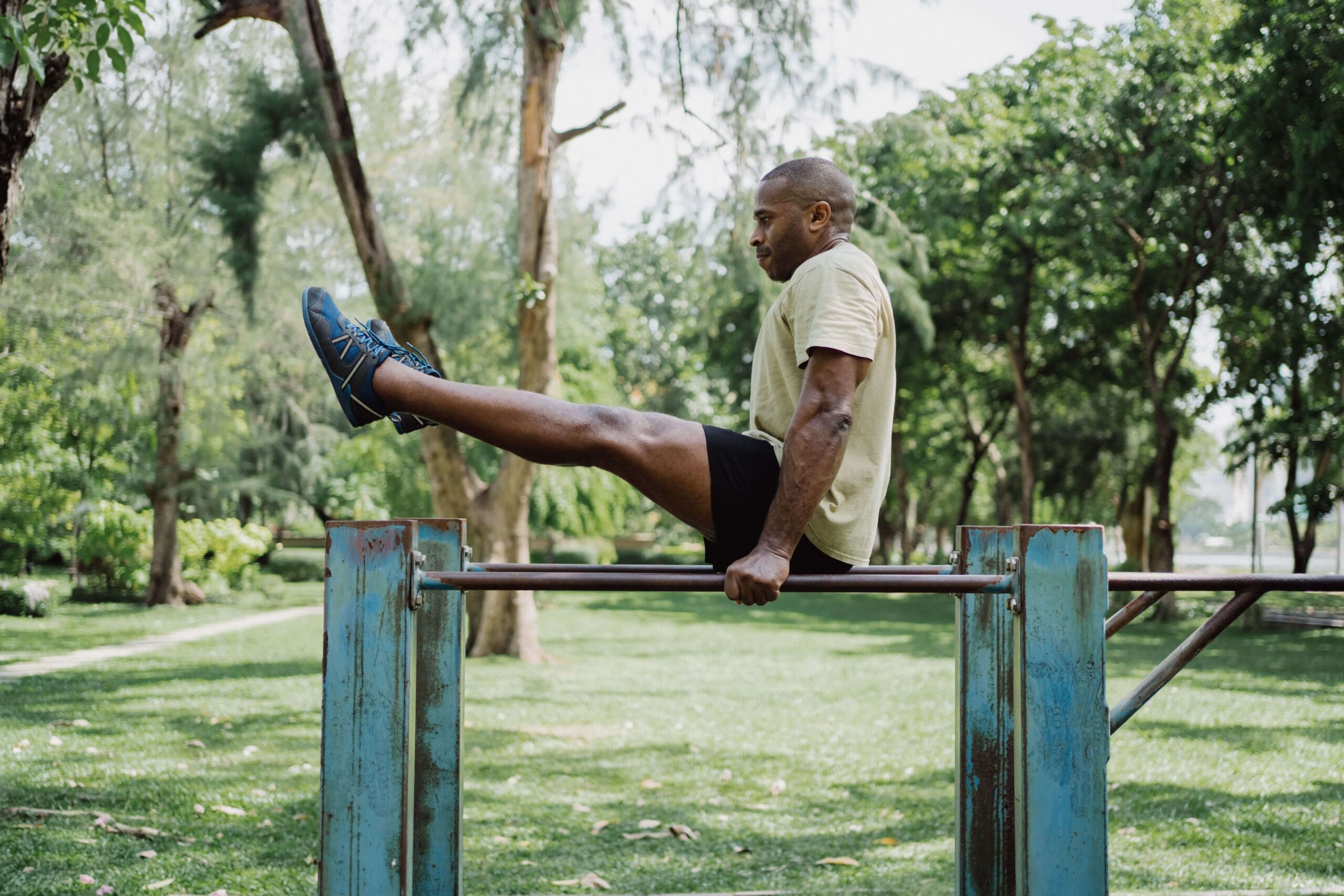
- The L-sit is one of the toughest core and hip flexor exercises in bodyweight training.
- Isometric push-up hold, pausing at the bottom under load
This is really the clearest way to explain how calisthenics can include both isometric and isotonic exercises without a single piece of equipment. You’re just choosing to pause instead of move.
According to the Mayo Clinic, isometric training is one of the few exercise styles you can do almost anywhere, and it helps maintain strength effectively, even if it’s not the most efficient way to build it from the scratch. This is why it works best paired with speed, not instead of it.
If you want a full routine built entirely around static holds like this, my free wall Pilates workout goes deep on wall-based holds you can start with today, most of them without any equipment at all.
Isotonic movement, the reps everyone already knows
Isotonic exercises are familiar. Your joints go through a full range of motion and the length of your muscles changes with every rep.
- Push-ups, chest, shoulders and triceps
- Squats, quads, hamstrings and glutes
- Pull-ups, back, biceps and grip
- Dips, triceps and lower chest
None of these exercises are the problem on their own. The gap only shows up once you understand how calisthenics can include both isometric and isotonic exercises and realize you’ve been skipping half the equation.
If push movements are part of your split, my push day workout guide explains why the chest and shoulder gains stall, and my pull day workout guide covers a back exercise that most people silently skip.
Why combining the two closes the gap that stalled my progress
This is what no one told me for two years. Isotonic reps build strength through movement, but isometric holds build stability that lets you precisely control that movement.
Skip the holds, and you’re training strength you can’t fully utilize. This is the flat line I have hit, and it is the same wall that many beginners run into quietly without knowing why.
If your numbers have stopped going up no matter how hard you push, it might be worth reading my article on why dumbbell workouts stop showing progress, the underlying fix applies as much to bodyweight training as it does to weights.
One caution before you start holding your breath through a wall sit
Isometric exercise can be an effective tool for supporting healthy blood pressure, but Mayo Clinic Health System notes that straining or holding your breath during a hold can cause a dangerous increase in blood pressure. The solution is simple. Breathe slowly and steadily through each hold, never tightening it.
By now it should be clear to explain how calisthenics can include both isometric and isotonic exercises without turning your routine upside down. Here’s exactly what that looks like in practice.
A simple way to explain how calisthenics can include both isometric and isotonic exercises
You don’t need to make radical changes to your daily routine. Simply combine a hold with a moving exercise, one behind the other, and repeat the circuit two or three times.
- Wall sit, 30 seconds
- Push-ups, 10 reps with a 3 second pause at the bottom of each one
- Plank, 20 seconds
- Bodyweight squats, 10 reps with a 3 second pause at the bottom
This structure mirrors what ACE Fitness recommends when designing bodyweight programs that need to hit strength, stability, and endurance without any equipment at all.
Conclusion
You don’t need to add a single new exercise to your daily routine to see its benefits. Simply add a pause where you’re already moving, and maintain a position where you would normally rest.
That one little change finally got my flat line moving again. Now you know exactly how calisthenics can include both isometric and isotonic exercises without adding a single extra minute to your workout, and I have a feeling it’ll do the same for you.
FAQs
Can beginners do isometric exercises?
Yes, and honestly it’s one of the gentlest places to start. Short holds of ten to fifteen seconds are enough to feel the difference.
How long should you hold an isometric exercise?
Most beginners do well starting around fifteen to twenty seconds per hold, then building up gradually as strength and comfort improve.
Do isometric exercises build visible muscle?
Not as effectively as isotonic movement on its own. Their real value is stability and control, which is exactly what makes isotonic reps more productive.
Is one type better than the other?
Not really. It’s not a competition. The two work best as teammates, not rivals, which is really the whole point of learning to explain how calisthenics can include both isometric and isotonic exercises in the first place.
